
Quick answer: WeVideo's most useful verified 2026 changes are not the imaginary “professional color grading” and “object removal” features the old article promised. The current release notes focus on captions, audio descriptions, account security, Safari access, Zoom and Panopto imports, and a long list of education and interactivity improvements.
Checked August 10, 2026. WeVideo last updated its public release notes on August 4. Feature access can depend on the license, role, integration, and plan.
Software update pages get stale fast, so I do not want this to be a breathless list of everything with a “new” badge.
I am separating changes that affect ordinary creation from tools aimed at schools, LMS administrators, and interactive-video teams. Before changing a workflow or plan, confirm the feature is actually available in your account.
Disclosure: This article contains sponsored WeVideo affiliate links. If you subscribe through one, I may earn a commission at no extra cost to you.
The source of truth is WeVideo's current release-notes page.
Check the current WeVideo offer
Table of contents
- Quick answer
- Creator changes
- Security and Safari
- Zoom and Panopto
- Education updates
- Claims removed
- How to test updates
- What to watch
- FAQ
- Bottom line
Quick take: WeVideo is best for creators, classrooms, nonprofits, and small teams that want a browser-based editor with screen/webcam recording, stock assets, green screen, collaboration, and simple publishing workflows.
Plans and promotions change often, so check WeVideo's current offer before choosing a subscription.
This page may include affiliate links. I only recommend tools when they fit the use case I am writing about.
The creator-facing changes I would notice
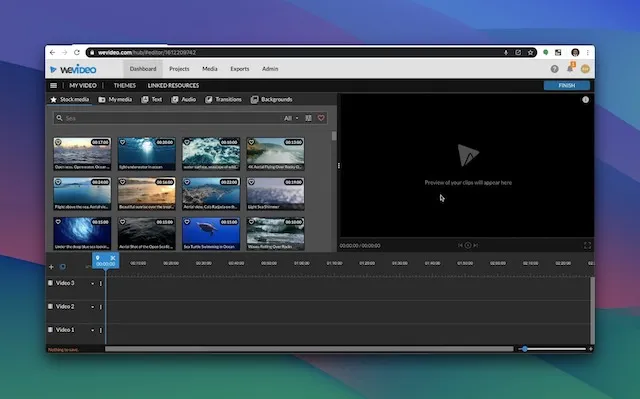
Automatic captions are the clearest general-purpose update. WeVideo says projects can generate or upload captions during export, then edit and translate them. Its detailed caption guide also covers VTT downloads and burned-in versions.
That can remove a separate transcription step, but it does not remove proofreading. Names, brands, numbers, accents, music, noisy rooms, and overlapping speakers still need a human pass.
WeVideo also added audio-description workflows in May 2026. Users can upload MP3 or WAV descriptions, or provide VTT/SRT transcripts for text-to-speech generation where the feature is available. The viewer can turn descriptions on or off in the WeVideo player.
| Update | Who may care | What I would test |
|---|---|---|
| Auto captions and translation | Creators, teams, educators | Accuracy, plan access, export handoff |
| Audio descriptions | Accessible media workflows | Timing, pronunciation, player behavior |
| Safari support | Mac users | Real project, uploads, recorder, extensions |
| Zoom/Panopto connections | Meeting and course-video teams | Permissions, ownership, import time |
See whether WeVideo fits your current workflow
Two-factor authentication is the quiet important update
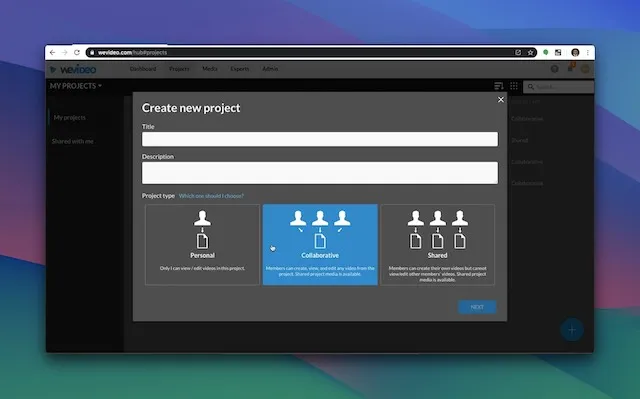
WeVideo added authenticator-app two-factor authentication in June 2026. That matters more to me than a cosmetic editor change, especially when an account holds unpublished client media, student work, recordings, or brand assets.
I would enable it, store recovery information safely, review who still has account access, and remove inactive users. For a team or school, also test what happens when someone changes roles or leaves.
Safari support also arrived in June for Multimedia Creation and Interactivity on Mac. “Supported” still deserves a real test: open a representative project, upload media, preview, export, and try any recorder, extension, LMS, or third-party integration your workflow needs.
Review WeVideo's current account options
Zoom and Panopto imports reduce handoff work
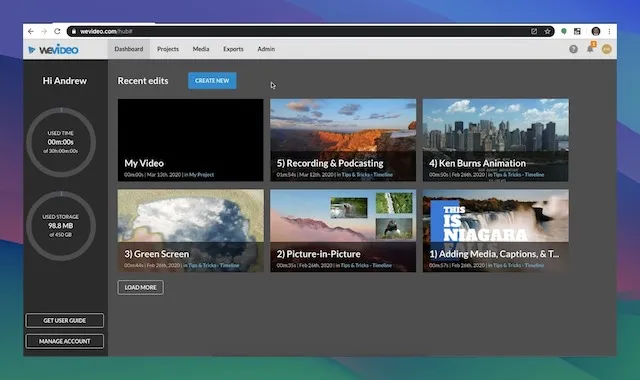
May and June release notes describe connections for Zoom cloud recordings and Panopto videos. The practical benefit is fewer download-upload copies when a meeting, lecture, or source recording already lives in one of those systems.
I would check ownership and permissions before celebrating the shortcut. Confirm which recording is the master, who can import it, whether captions and metadata travel with it, and what happens when the source is deleted or access changes.
For a regular marketing editor who does not use Zoom cloud recordings or Panopto, these updates may change nothing. That is the useful way to read a release note: not “is this impressive?” but “does this remove a real step from my work?”
Most 2026 updates are education and interactivity features
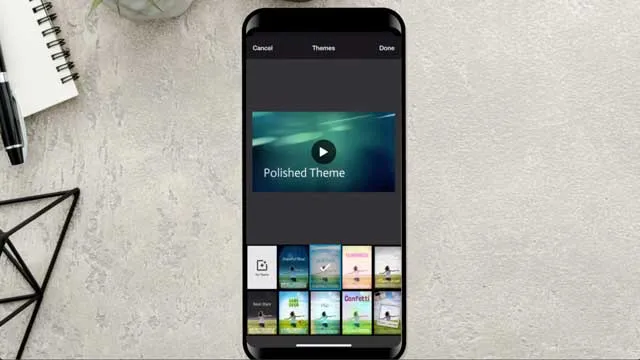
A large share of the current release log serves teachers, learners, LMS users, and administrators. Recent examples include assignment due dates, one LMS integration for Multimedia Creation and Interactivity, video comments in ClassFeed, interactive-video preview, AI-generated interactions for supported external hosts, and batch settings for interactive videos.
June and July also added learning-path monitoring improvements, sortable discussion posts, D2L embed choices, and account-level integrations. Those can be meaningful in a school deployment while being irrelevant to an individual video editor.
I would evaluate an education update with one real course:
- Confirm the license and role required.
- Test the LMS launch as instructor and learner.
- Check captions, privacy, due dates, grading, and stored responses.
- Export or document any progress data the school must retain.
- Verify what happens when the course ends or a user is removed.
Compare current WeVideo education and team access
Claims from the old article I removed
The 2024 version said WeVideo had added professional color grading, AI object removal, automatic scene transitions, simultaneous real-time project editing, near-desktop parity in the mobile app, universal direct social publishing, and a general cloud-storage increase.
I could not support those statements with the current WeVideo release history, so they are gone. Some nearby capabilities may exist in a different form or plan, but that is not enough to repeat a specific claim as fact.
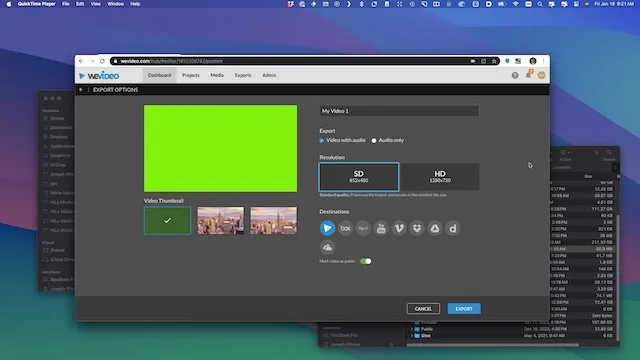
Current export limits say Creator, Teams, and Enterprise projects can export up to 4K and have unlimited publish time and cloud storage subject to Fair Use. Education plan limits differ. That is more precise than saying storage simply increased for everyone.
How I test whether an update is useful
- Duplicate a representative project.
- Confirm plan, role, browser, and integration requirements.
- Run the old workflow and the new workflow once.
- Compare time, quality, errors, permissions, and export behavior.
- Keep the old process until the new one survives a real delivery.
What I would watch next
The release notes show WeVideo investing heavily in accessibility, education administration, interactive video, and connections to existing video systems. I would watch whether those tools become easier to discover and whether creator/team plans get equally clear workflow improvements.
I would also watch the boundary between AI assistance and review. Captions, translations, interactions, scripts, and audio descriptions can save setup time, but someone still owns accuracy, permissions, accessibility, and the final communication.
Check WeVideo's live features and plan details

WeVideo updates FAQ
What are the biggest verified WeVideo updates in 2026?
For general creators, automatic captions, audio descriptions, two-factor authentication, Safari support, and Zoom/Panopto connections stand out. Many other updates focus on education and interactivity.
Does WeVideo have automatic captions?
Yes. Current documentation covers generating or uploading captions during export, editing them afterward, translating them, and downloading separate or burned-in versions. Availability can depend on the plan.
Does WeVideo support two-factor authentication?
Yes. WeVideo's June 2026 release notes describe authenticator-app two-factor authentication.
Can I use WeVideo in Safari?
WeVideo added Safari support on Mac for Multimedia Creation and Interactivity in June 2026. Test the specific tools and integrations your project needs.
Did WeVideo add real-time simultaneous editing?
I found no current release-note support for the old article's claim that multiple users can edit the same project simultaneously in real time. Shared and collaborative workflows are not necessarily Google-Docs-style co-editing.
Did every WeVideo plan get unlimited 4K exports and storage?
No. Current limits vary by license. Creator, Teams, and Enterprise plans list up to 4K with unlimited publish time and storage subject to Fair Use; education licenses have different limits.
How often should I check for updates?
Check before renewing, changing a workflow, or relying on a new feature. For normal work, a monthly scan of release notes is plenty.
My bottom line
The real 2026 story is less flashy and more useful than the old page suggested: better caption and accessibility workflows, stronger account security, broader browser and source-system support, and steady investment in education tools. Pick the updates that remove an actual problem, test them on a copy, and ignore the rest until you need them.

About the Author
Joseph Nilo has been working professionally in all aspects of audio and video production for over twenty years. His day-to-day work finds him working as a video editor, 2D and 3D motion graphics designer, voiceover artist and audio engineer, and colorist for corporate projects and feature films.
WeVideo Related Posts
Surprising WeVideo Reviews: What the Experts Really Think!
Affordable Video Editing: WeVideo Pricing and Plans Explained
WeVideo Editing Tips: A Beginner's Guide to Mastering the Platform
Step-by-Step Tutorial: Creating Your First Video on WeVideo
Advanced WeVideo Features: Unlocking Creative Potential for Professionals
WeVideo vs. Other Editing Software: A Comprehensive Comparison
Maximizing School Projects with WeVideo: A Teacher's Perspective
WeVideo for Business: Enhancing Your Company's Digital Marketing
WeVideo Mobile App Review: Editing on the Go
Integrating WeVideo in E-Learning: Tips and Tricks
WeVideo for YouTube Creators: Elevating Your Channel
WeVideo Updates and Feature Improvements
WeVideo for Nonprofits: Storytelling and Advocacy Through Video
WeVideo and Social Media Marketing: Strategies for Success
WeVideo’s Cloud-Based Editing: Advantages for Remote Work
Table of contents
- Quick answer
- Creator changes
- Security and Safari
- Zoom and Panopto
- Education updates
- Claims removed
- How to test updates
- What to watch
- FAQ
- Bottom line
WeVideo Related Posts
Surprising WeVideo Reviews: What the Experts Really Think!
Affordable Video Editing: WeVideo Pricing and Plans Explained
WeVideo Editing Tips: A Beginner's Guide to Mastering the Platform
Step-by-Step Tutorial: Creating Your First Video on WeVideo
Advanced WeVideo Features: Unlocking Creative Potential for Professionals
WeVideo vs. Other Editing Software: A Comprehensive Comparison
Maximizing School Projects with WeVideo: A Teacher's Perspective
WeVideo for Business: Enhancing Your Company's Digital Marketing
WeVideo Mobile App Review: Editing on the Go
Integrating WeVideo in E-Learning: Tips and Tricks
WeVideo for YouTube Creators: Elevating Your Channel
WeVideo Updates and Feature Improvements
WeVideo for Nonprofits: Storytelling and Advocacy Through Video
WeVideo and Social Media Marketing: Strategies for Success
WeVideo’s Cloud-Based Editing: Advantages for Remote Work