
Quick answer: WeVideo is a good browser-based editor for beginners, classrooms, and small teams that value easy sharing more than deep post-production control. I would not choose it over Final Cut Pro, Premiere Pro, or DaVinci Resolve for demanding color, audio, effects, or large-media workflows.
Checked August 10, 2026. I reviewed WeVideo's current plans, trial terms, editing modes, recording, and collaboration documentation.
WeVideo makes the most sense when getting people into the edit quickly matters more than building a traditional post-production setup.
That is useful for a student project, a teacher making lesson material, a marketing team sharing an edit, or a creator working from more than one computer. It is less convincing when you need the precision and ecosystem of a full desktop editor.
Disclosure: This review includes affiliate links. If you buy through them, I may earn a commission at no extra cost to you. You can check WeVideo directly while comparing the details below.
Table of contents- Review summary
- Quick verdict
- What WeVideo is
- Plans and trials
- Interface
- Editing modes
- Editing tools
- Stock and templates
- Recording
- Collaboration
- Verdict
- FAQ
My WeVideo review in a nutshell
- Best for: beginners, classrooms, tutorials, and small teams.
- Main strengths: browser access, recording, approachable editing, stock assets, and managed collaboration.
- Main drawbacks: less finishing depth than a desktop editor and a workflow that depends on uploads and internet access.
- Plan warning: the legacy permanent Free Account began phasing out in April 2026.
Compare the fit on WeVideo with a real project before subscribing.
Quick WeVideo verdict
My verdict: good for the audience it is built for.
WeVideo lowers the setup burden for people who need to record, edit, share, and collaborate without managing a traditional desktop post-production system.
It is not my first choice for complex professional finishing. Its value is convenience and access, not pretending every editing workflow is the same.
Disclosure: The button below is a sponsored affiliate link, which means I may earn a commission at no extra cost to you.
What WeVideo is—and what it is not
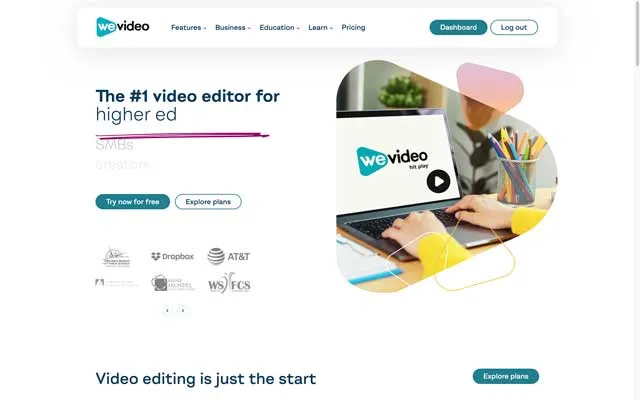
WeVideo is a cloud-based video editor that runs in a web browser, with companion mobile access and tools for recording, stock media, templates, captions, and collaboration.
Its real advantage is access. You do not need to install a large desktop application, and a school or team can manage people inside a shared license. That makes it easier to get a group working than handing everyone a local project file and a drive full of media.
It is not simply Premiere Pro in a browser. If your work depends on detailed color management, a large plugin collection, complex audio finishing, or tight After Effects integration, WeVideo is a different class of tool. That is not a flaw for its intended audience, but it is an important buying distinction.
Plans, trials, and the disappearing free account
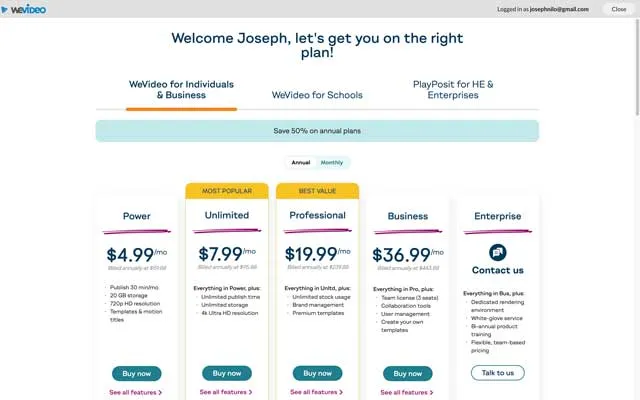
WeVideo now organizes its public offering around Creator, Teams, Enterprise, Instructor, and education licenses. The current pricing page should be the source of truth because plan names, billing choices, and promotions can change.
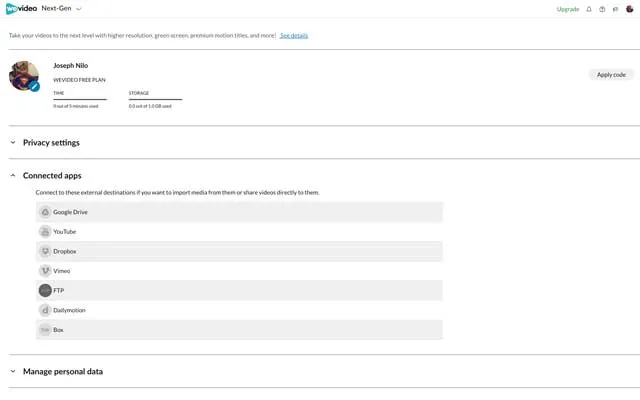
The old permanent Free plan is not a safe assumption for a new account. WeVideo's January 2026 terms say the legacy Free Account began phasing out in April 2026. The current path is a time-limited Creator or Instructor trial followed by a paid plan; WeVideo's trial guide says trial access resembles the chosen paid plan but has limitations.
Check the live plan page before signing up. Look at seats, resolution, storage, publishing limits, stock access, collaboration, and what happens to your media after a trial or subscription ends—not just the monthly equivalent shown in the headline price.
The interface is approachable, with one important choice
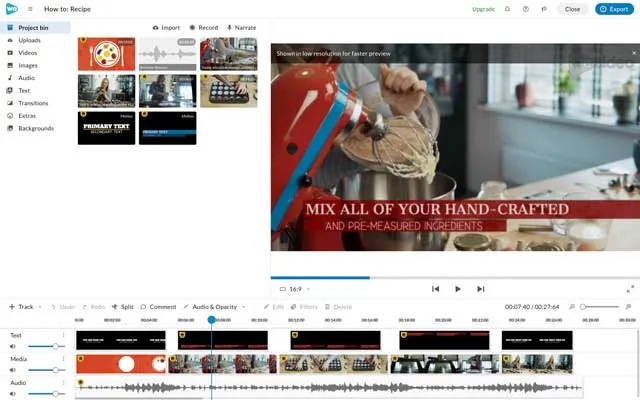
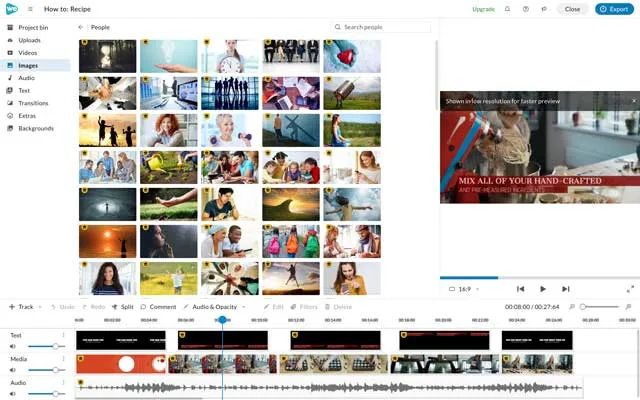
The editor is easier to approach than most professional desktop software. Media lives in a project bin, clips go on a timeline, and the main tools are visible without building a custom workspace first.
WeVideo currently offers a simpler Storyboard mode and a Full-featured editor. Choose based on the project, not your pride as an editor.
- Storyboard: a simpler space for a first cut or basic project.
- Full-featured editor: multiple tracks, transitions, backgrounds, effects, and more detailed control.
- Practical rule: start in Storyboard only if its limits help the assignment; otherwise begin in the full editor.
Storyboard versus the Full-featured editor
WeVideo's current mode guide describes Storyboard as the beginner-friendly option for basic work or a rough draft. You can move a Storyboard project into the Full-featured editor later, but you cannot move a full-editor project backward into Storyboard.
The Full-featured editor is the better default when you need multiple audio and video tracks, transitions, backgrounds, and more control. I would start there for client or marketing work; Storyboard is more useful for a first project or a tightly structured classroom assignment.
The browser design is a genuine benefit, but it also means upload time and connection quality are part of the editing experience. If you regularly work with many hours of camera originals, test a representative project before moving an entire workflow to WeVideo.
Editing tools: enough for everyday projects
WeVideo covers the work most first-time editors expect: trimming, splitting, cropping, speed changes, titles, transitions, audio levels, voiceover, color adjustments, and layered picture-in-picture layouts.
- Trim, split, crop, rotate, and change clip speed
- Layer video, images, titles, and audio
- Add transitions, templates, and stock media
- Adjust color and audio for everyday projects
- Record voiceover, webcam, screen, or both
The Full-featured editor gives you the control needed for explainers, social clips, presentations, school projects, and straightforward marketing videos. Templates and stock assets can shorten the blank-page stage.
The limit is depth. A list of features can make every editor sound equivalent, but the experience changes once a project needs careful color work, complex motion graphics, advanced audio repair, extensive keyboard customization, or a specialized interchange pipeline. That is where I would move to a desktop editor rather than force WeVideo to be something it is not.

Stock media, templates, and music
WeVideo includes stock video, images, music, effects, and templates, with the available library depending on the plan. This can be a real time-saver when a school or small business does not already subscribe to a separate stock service.
Do not treat “included” as permission for every imaginable use. Check the current license and plan terms for client delivery, paid advertising, templates, and content you intend to redistribute. Keep a record of the plan and license that covered the finished project.
- Useful: built-in assets reduce the need to source every background, track, or cutaway separately.
- Check first: library access and usage rights vary by plan and project type.
- Keep records: save the relevant license information with client and commercial project files.
Screen, webcam, and green-screen tools
Recording is one of WeVideo's more practical strengths. Its current instructions support webcam, screen, or simultaneous screen-and-webcam capture from the project, with recorded media added to the project bin and timeline.
That makes WeVideo useful for tutorials, lesson material, product walkthroughs, and simple talking-head content without building a separate capture workflow.
- Screen recording: useful for tutorials and demonstrations.
- Webcam recording: useful for introductions, lessons, and presentations.
- Screen plus webcam: keeps the presenter and demonstration together.
- Green screen: helpful when the backdrop is lit and shot cleanly.
Green-screen keying is also available on supported plans. It is handy for classroom and presentation work, but lighting the screen evenly still matters. Software cannot completely rescue a wrinkled backdrop, heavy shadows, or green spill on the subject.
For a quick tutorial or announcement, the all-in-one recording path is convenient. For a polished software demo with detailed audio cleanup, cursor control, and motion graphics, I would still record and finish in a dedicated production workflow rather than rely only on WeVideo.
Collaboration is useful, but plan boundaries matter
WeVideo supports both asynchronous and real-time collaboration. According to its current collaboration guide, collaborators need to be inside the same WeVideo license, and availability depends on the plan and permissions.
That is a good fit for a classroom, department, or small team managed under one account. It is less flexible for an ad hoc group of outside freelancers who each have unrelated accounts. Confirm the seat model and invite workflow before making collaboration the reason you buy.
What I would check during the trial
- Upload a normal camera file, not just a short phone clip.
- Build a two- or three-minute edit with the number of tracks you actually use.
- Record a screen-and-webcam segment and clean up the audio.
- Invite a real collaborator under the intended license.
- Export at the resolution and frame rate you need.
- Confirm what happens to media and exports if you cancel.
Open WeVideo and use the trial as a workflow test, not a tour of the template library.
Is WeVideo worth it?
Yes—for the right job. I like WeVideo for beginners, schools, distributed small teams, and people who need screen recording plus straightforward editing in one browser-based place.
I would look elsewhere if the project depends on advanced color, detailed sound mixing, complex motion graphics, offline work, large camera libraries, or a deep plugin ecosystem. Final Cut Pro, Premiere Pro, and DaVinci Resolve ask more of a new editor, but they also leave more room to grow.
My advice is simple: test the hardest normal project you expect to make. If the upload, edit, collaboration, and export all feel comfortable, WeVideo may save you a lot of setup and support time. If you hit the ceiling during the trial, believe the test.
Disclosure: The link below is a sponsored affiliate link, which means I may earn a commission at no extra cost to you.
If the browser workflow fits your needs, you can try WeVideo on a real project.

WeVideo FAQ
Is WeVideo any good?
Yes, for browser-based editing, classroom work, tutorials, and small-team projects. It is easy to approach and combines recording, stock media, templates, collaboration, and editing. It is not as deep as a full professional desktop editor.
Is WeVideo good for beginners?
Yes. Storyboard mode keeps a first project simple, while the Full-featured editor provides room to add tracks and more control. Beginners should still learn basic story structure, audio levels, and clean trimming instead of leaning on templates for everything.
Does WeVideo still have a free plan?
Do not assume a new permanent free account is available. WeVideo's January 2026 terms say its legacy Free Account began phasing out in April 2026. Its current public offer emphasizes time-limited Creator and Instructor trials.
What plans does WeVideo offer?
The current public structure includes Creator for an individual, Teams for a small team, Enterprise, Instructor, and education organization licenses. Check the live pricing page because plan names, prices, seats, and promotions can change.
Can people edit a WeVideo project together?
Yes. WeVideo supports real-time and asynchronous collaboration, but users need to be within the same license and the feature depends on plan permissions.
Does WeVideo work in a browser?
Yes. Browser access is a central advantage. It also means upload speed, internet reliability, and cloud-media handling should be part of your trial.
Who should skip WeVideo?
Editors who need advanced color, detailed audio post, complex motion graphics, extensive plugins, offline work, or large-media workflows will probably be better served by Final Cut Pro, Premiere Pro, or DaVinci Resolve.

About the Author
Joseph Nilo has been working professionally in all aspects of audio and video production for over twenty years. His day-to-day work finds him working as a video editor, 2D and 3D motion graphics designer, voiceover artist and audio engineer, and colorist for corporate projects and feature films.
Video Editing Related Posts
Adobe Creative Cloud for Video Editing
Top 10 Video Editing Software for Mac
The Benefits of Dual-Monitor Setups for Video Editing
How to Choose the Right Video Editing Monitor for Your Needs
Best Monitors for Video Editing
(Almost) 50 Mistakes Every New Video Producer Makes
Breakthrough AI Tools: Elevate Your Video Production Game!
Find the Best Export Settings for YouTube Videos Now!
Your Guide on Where To Find Video Editor Remote Jobs
Adobe video workflow guides
- Review summary
- Quick verdict
- What WeVideo is
- Plans and trials
- Interface
- Editing modes
- Editing tools
- Stock and templates
- Recording
- Collaboration
- Verdict
- FAQ
Video Editing Related Posts
Adobe Creative Cloud for Video Editing
Top 10 Video Editing Software for Mac
The Benefits of Dual-Monitor Setups for Video Editing
How to Choose the Right Video Editing Monitor for Your Needs
Best Monitors for Video Editing
(Almost) 50 Mistakes Every New Video Producer Makes
Breakthrough AI Tools: Elevate Your Video Production Game!
Find the Best Export Settings for YouTube Videos Now!
Your Guide on Where To Find Video Editor Remote Jobs
Adobe video workflow guides