
Quick answer: The fastest way to get better at WeVideo is to finish a series of small projects with one skill goal each. Make a clean rough cut, improve the audio, simplify the titles, add captions, collect feedback, and export for a real destination. Six finished videos will teach you more than six hours of browsing effects.
Checked August 10, 2026. I matched this practice plan to WeVideo's current project, editing-mode, recording, caption, collaboration, and export documentation.
You do not become a better editor by making every project more complicated. You get better by noticing what the viewer needs and removing what gets in the way.
This is the practice plan I would use for WeVideo, whether you are starting from scratch or trying to move beyond template-first edits.
Disclosure: This guide contains sponsored WeVideo affiliate links. If you subscribe through one, I may earn a commission at no extra cost to you.
Quick take: WeVideo is best for creators, classrooms, nonprofits, and small teams that want a browser-based editor with screen/webcam recording, stock assets, green screen, collaboration, and simple publishing workflows.
Plans and promotions change often, so check WeVideo's current offer before choosing a subscription.
This page may include affiliate links. I only recommend tools when they fit the use case I am writing about.
Table of contents
Set up a practice system you can finish
Keep each exercise between 30 and 90 seconds. Use the same small folder of footage for several versions so you can pay attention to the edit instead of constantly searching for material.
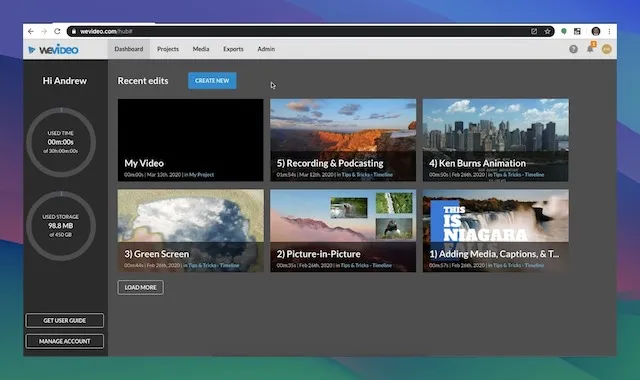
WeVideo's current project guide explains the Create menu and project types, while its editing-mode guide separates Storyboard from the full editor. Storyboard is fine for learning sequence. Use the full editor when you need multiple tracks and more control. You can move a Storyboard project into the full editor later, but not backward.
| Practice project | Skill to isolate | Done when |
|---|---|---|
| 1. Silent sequence | Shot order and trimming | The story reads without music or text |
| 2. Talking-head edit | Dialogue and pacing | The voice is clear and pauses feel natural |
| 3. Mini tutorial | Screen recording and titles | Every step is easy to follow |
| 4. Mood change | Music and cut rhythm | Audio supports rather than hides the edit |
| 5. Accessible version | Captions and mobile readability | Captions are proofread and text works small |
| 6. Feedback pass | Revision and export | A second viewer's real confusion is fixed |
Check the current WeVideo offer
Key Tools to Explore:
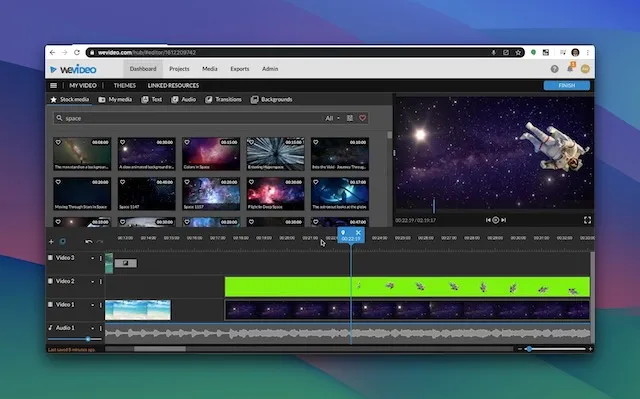
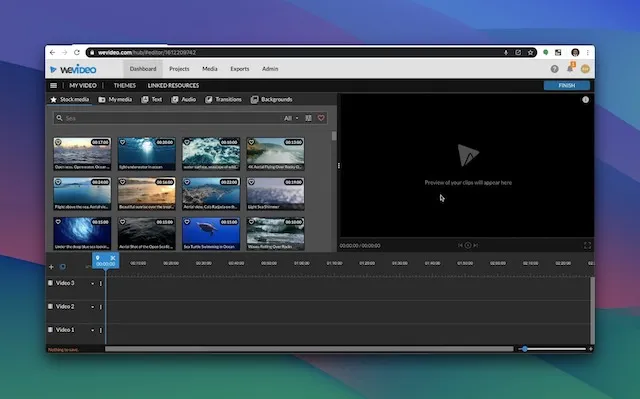
Start with features like the drag-and-drop timeline, which lets you arrange your clips and audio tracks with precision. Experiment with transitions and effects to add polish to your videos. Even as a beginner, you'll build confidence with practice.
Learn to build a clean rough cut first
Bring only the useful clips into the project. WeVideo's media guide distinguishes the project bin from account-wide uploads, which is a good reason to keep each exercise tidy.
- Put the clips in story order.
- Trim obvious mistakes and dead air.
- Watch the whole sequence without stopping.
- Remove anything that repeats information.
- Only then add B-roll, titles, transitions, or music.
Most beginner edits improve when they get shorter. A transition cannot fix a weak shot order, and background music cannot fix a story the viewer cannot follow.
For the first exercise, turn off the music and remove every title except the opening identification. If the sequence still makes sense, the edit is doing its job. If it does not, fix the pictures before decorating them.
Practice the rough-cut workflow in WeVideo
Creative Freedom:
One of the most exciting aspects of WeVideo is its library of stock footage, images, and music. This resource is invaluable for creators looking to add a professional touch without breaking the bank.
Treat audio as an editing skill, not a final chore
Make the voice easy to understand before you polish anything else. Cut distracting noises where you can, keep dialogue levels consistent, and lower music until it supports the speaker instead of competing with them.
WeVideo's current recording guide covers webcam, screen, and combined screen-and-webcam capture inside a project. That makes a short tutorial a useful practice assignment: record one task, cut the hesitation, and add only the labels the viewer actually needs.
Listen once on headphones and once through ordinary laptop or phone speakers. Those two passes catch different problems. If a viewer has to strain to hear the point, a beautiful title animation does not matter.
Make titles simpler and more useful
Pick one title style, one type family, and a small color palette. Keep text large enough for a phone, leave it on screen long enough to read, and use it to identify a person, step, place, or key idea—not to repeat every spoken word.
Build a short audio-and-title exercise
The Power of Sharing:
WeVideo's sharing capabilities don't stop at collaboration. Once your masterpiece is ready, share it directly to social media platforms or download it for later use. The ease of sharing your work broadens your audience reach, making it a crucial feature for content creators.
Add captions, then proofread them
WeVideo's caption guide documents generated or uploaded captions, editing, translation, VTT downloads, and burned-in versions where available. Generation is the start of the job, not the end.
Check names, brand terms, numbers, punctuation, speaker changes, and timing. Watch the captioned version once with the sound off. That quickly shows whether the text is readable and whether important visual information still needs explanation.
Use feedback without turning the project into a committee
Ask one viewer three questions: Where were you confused? Where did it feel slow? What do you remember at the end? Those answers are more useful than “Do you like it?”
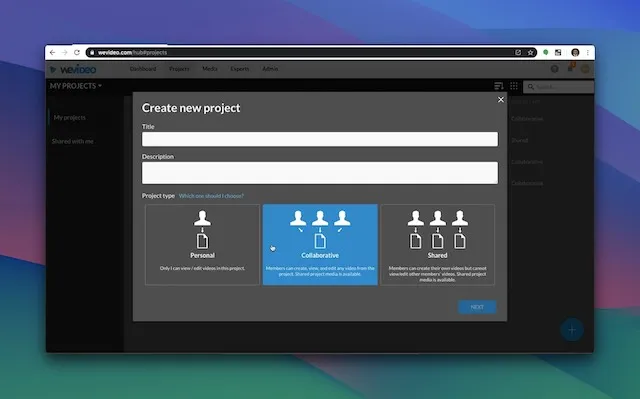
WeVideo's current collaboration guide says access depends on the plan, permissions, and people being inside the same license. Whether feedback happens inside WeVideo or in a message, write down the problem before changing the timeline. Fix the communication issue; you do not have to accept every suggested solution.
Test WeVideo with a real feedback pass
Always Improving:
Keep an eye out for tutorials and tips on WeVideo's website and social media channels. They're great resources for learning about new features and enhancing your skills.

Export for the place people will actually watch
Before exporting, watch from the first frame to the last. Check spelling, black frames, clipped speech, music level, captions, and whether the ending hangs around too long.
WeVideo's current export guide covers title, file type, resolution, subtitles, frame rate, quality, and destination. Available choices depend on the account. Open the exported file and watch it once; a successful export is not automatically a correct delivery.
A simple editing scorecard
- Story: Can someone explain the point after one viewing?
- Pacing: Does any moment stay longer than it needs to?
- Audio: Is speech clear on ordinary speakers?
- Text: Is every title readable and necessary?
- Accessibility: Are captions accurate and important visuals understandable?
- Delivery: Does the exported file work in its real destination?
WeVideo editing skills FAQ
How long does it take to get good at WeVideo?
You can learn the basic interface quickly. Getting good at story, timing, audio, and revision takes repeated finished projects. Six focused short edits are a useful first milestone.
Should beginners use Storyboard or the full editor?
Storyboard is useful when its limits help you focus on sequence. Start in the full editor when you know you need multiple tracks, layered audio, or more control.
What should I practice first?
Practice shot order and clean trimming before effects. A silent 30-second sequence is one of the best first exercises.
How do I make WeVideo edits look less amateur?
Use fewer styles, shorten weak moments, make dialogue clear, keep titles readable, and use transitions only when they communicate a real change.
Are automatic captions finished when they generate?
No. Proofread names, terms, numbers, punctuation, speaker changes, and timing before publishing.
How do I know an edit is finished?
It is finished when the story is clear, the audio is comfortable, the text is readable, the export works, and another pass would add decoration rather than solve a viewer problem.
My bottom line
Use WeVideo to finish small, deliberate projects. Separate the skills, review the export honestly, and keep a short list of mistakes you do not want to repeat. That is a much more reliable path from beginner to capable editor than chasing whichever effect looks newest.

About the Author
Joseph Nilo has been working professionally in all aspects of audio and video production for over twenty years. His day-to-day work finds him working as a video editor, 2D and 3D motion graphics designer, voiceover artist and audio engineer, and colorist for corporate projects and feature films.
WeVideo Related Posts
Surprising WeVideo Reviews: What the Experts Really Think!
Affordable Video Editing: WeVideo Pricing and Plans Explained
WeVideo Editing Tips: A Beginner's Guide to Mastering the Platform
Step-by-Step Tutorial: Creating Your First Video on WeVideo
Advanced WeVideo Features: Unlocking Creative Potential for Professionals
WeVideo vs. Other Editing Software: A Comprehensive Comparison
Maximizing School Projects with WeVideo: A Teacher's Perspective
WeVideo for Business: Enhancing Your Company's Digital Marketing
WeVideo Mobile App Review: Editing on the Go
Integrating WeVideo in E-Learning: Tips and Tricks
WeVideo for YouTube Creators: Elevating Your Channel
WeVideo Updates and Feature Improvements
WeVideo for Nonprofits: Storytelling and Advocacy Through Video
WeVideo and Social Media Marketing: Strategies for Success
WeVideo’s Cloud-Based Editing: Advantages for Remote Work
Table of contents
WeVideo Related Posts
Surprising WeVideo Reviews: What the Experts Really Think!
Affordable Video Editing: WeVideo Pricing and Plans Explained
WeVideo Editing Tips: A Beginner's Guide to Mastering the Platform
Step-by-Step Tutorial: Creating Your First Video on WeVideo
Advanced WeVideo Features: Unlocking Creative Potential for Professionals
WeVideo vs. Other Editing Software: A Comprehensive Comparison
Maximizing School Projects with WeVideo: A Teacher's Perspective
WeVideo for Business: Enhancing Your Company's Digital Marketing
WeVideo Mobile App Review: Editing on the Go
Integrating WeVideo in E-Learning: Tips and Tricks
WeVideo for YouTube Creators: Elevating Your Channel
WeVideo Updates and Feature Improvements
WeVideo for Nonprofits: Storytelling and Advocacy Through Video
WeVideo and Social Media Marketing: Strategies for Success
WeVideo’s Cloud-Based Editing: Advantages for Remote Work