
Quick Answer
Updated June 2026: Adobe Creative Cloud is strongest for video editors who need more than a timeline. Premiere handles the edit, After Effects handles motion graphics and compositing, Audition handles deeper audio cleanup, Media Encoder handles export queues, Frame.io helps with review, and Adobe Express/Firefly help with social deliverables and AI-assisted creative work.
Related: If export queues and delivery formats are your main question, read Adobe Media Encoder price, download, and alternatives.
Related: For the newer Premiere beta workflow, see Adobe Premiere Pro AI Assistant.
Affiliate disclosure: This page contains affiliate links. I may earn a commission if you buy through them, at no extra cost to you.
If you only cut simple videos, Premiere alone may be enough. If you regularly move between editing, motion graphics, thumbnails, client review, audio cleanup, captioning, and social deliverables, Creative Cloud Pro is the plan to compare.
Adobe currently lists Premiere and After Effects single-app plans at US$22.99/month annual billed monthly. Adobe lists Creative Cloud Pro regularly at US$69.99/month, with new-subscriber promos sometimes shown at US$34.99/month for the first 3 months. Always verify the current checkout price before subscribing.
Cost checkpoint: if Premiere is the only app you need, start with the Premiere Pro cost guide. If your workflow also needs After Effects, Audition, Photoshop, Media Encoder, or Frame.io, compare the broader Creative Cloud pricing and plans before you choose.
I only recommend software I would seriously evaluate for real creator or production workflows.
⭐⭐⭐⭐⭐
I pay for Adobe Creative Cloud and have used it every day in my 20-year career as a video editor, producer, and colorist.
Use the Adobe link below to check the current Creative Cloud offer. It can support this site and helps me keep these guides updated. Check current Adobe Creative Cloud offer.
Get Adobe Creative Cloud Now!Table of Contents
Premiere: The Editing Hub
Premiere is the center of Adobe's video workflow. This is where I would organize footage, build the edit, manage captions, cut dialogue, add basic graphics, balance audio, and export drafts for review.
The reason Premiere matters inside Creative Cloud is that it does not live alone. You can send motion graphics work to After Effects, round-trip audio cleanup through Audition, queue exports in Media Encoder, and use Adobe assets without rebuilding the project in another ecosystem.
For solo YouTube edits, Premiere may be more software than you need. For client work, branded content, course production, agency handoff, and repeatable review workflows, the Adobe stack becomes much easier to justify.
Adobe's current Premiere plan page also lists Adobe Express Premium, Frame.io for Creative Cloud, 100GB cloud storage, and 25 monthly generative credits with the Premiere single-app path.
Premiere Features That Matter for Real Work
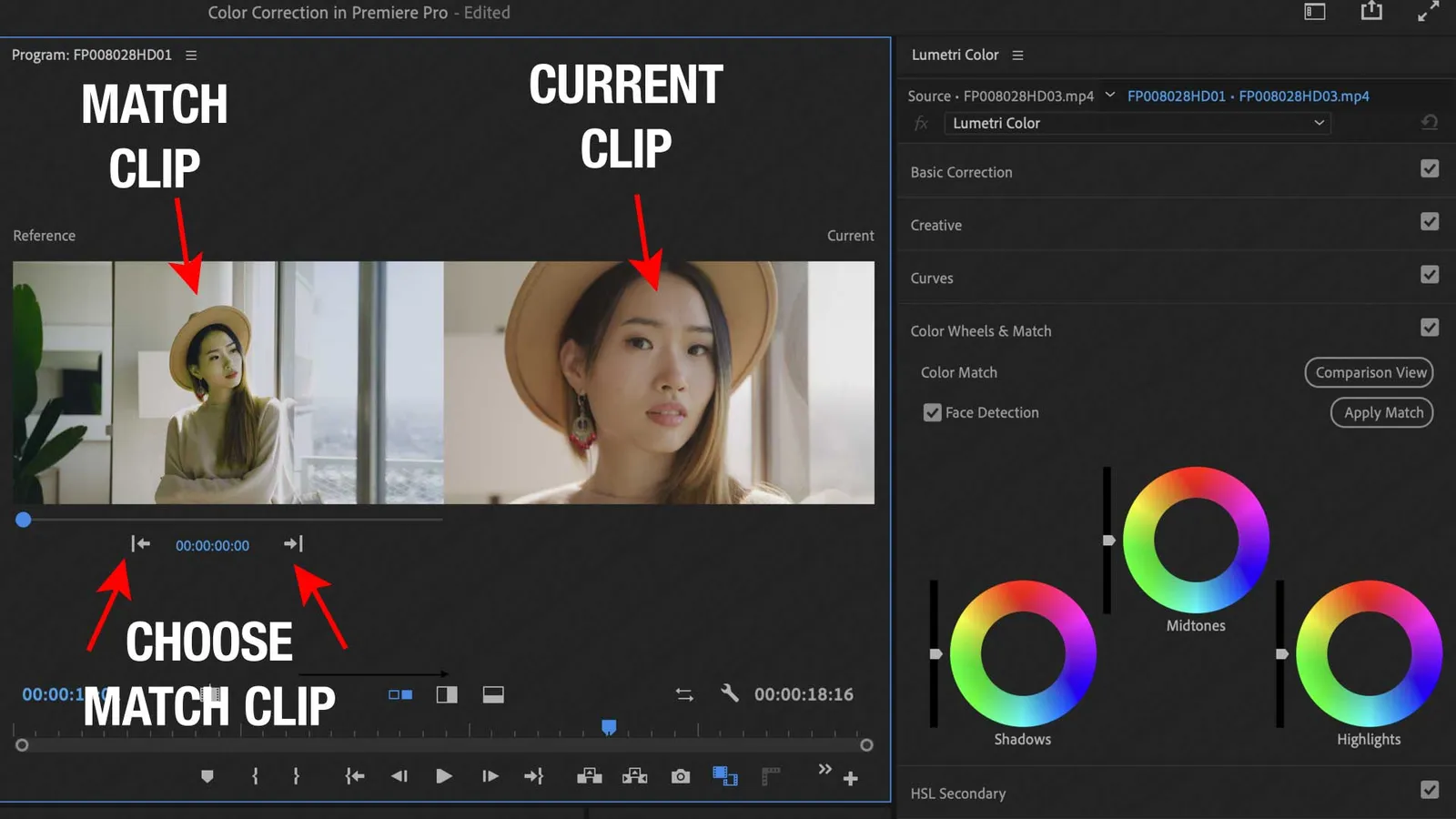
The most useful Premiere features are the practical ones: reliable timeline editing, captions and transcription, Lumetri Color, Essential Sound, multicam editing, proxy workflows, responsive exports, and integration with After Effects and Media Encoder.
Lumetri Color is useful for quick correction and consistent looks. It is not a replacement for a dedicated grading workflow on every job, but it is more than enough for many creator, business, and YouTube projects.
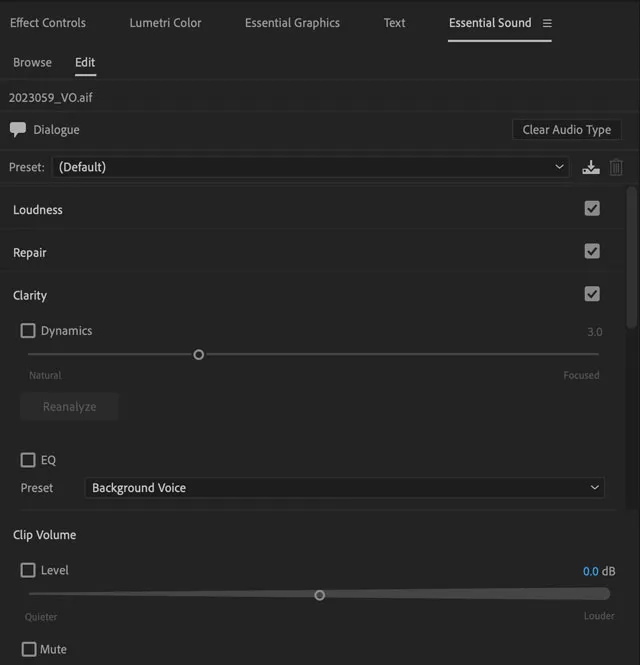
The Essential Sound panel is also important because audio problems are one of the fastest ways to make a good video feel amateur. Dialogue cleanup, loudness targets, music ducking, and basic mix organization all matter.
Essential Sound and Audio Cleanup
Premiere's Essential Sound panel is designed for everyday video editors who need clean, understandable audio without becoming full-time audio engineers.
For deeper repair, noise reduction, podcast cleanup, or detailed spectral editing, Adobe Audition is the better companion app. That is one of the biggest arguments for Creative Cloud over a single video editor.
- Multi-Camera Editing: Allows for the simultaneous editing of multiple camera angles in a single sequence.
- Dynamic Link with After Effects: Seamlessly integrate with After Effects for advanced graphics and visual effects.
- VR Editing: Offers tools to edit and refine VR or 360-degree videos.
- Audio Ducking: Automatically lowers music volume during dialogue or voiceovers.
- Auto Reframe: Automatically adjusts and resizes video to different aspect ratios.
- Speech to Text: Integrated feature for automatic transcription and subtitle generation.
Premiere Pro Alternatives
DaVinci Resolve
- Strengths: Known for its superior color grading and correction tools. DaVinci Resolve offers a robust free version with many professional features.
- Weaknesses: Can be more demanding on hardware. Its interface might be overwhelming for beginners.
- Comparison: Premiere Pro is generally more user-friendly and integrates better with other Adobe products, making it preferable for users already in the Adobe ecosystem. Resolve, however, excels in color grading.
Final Cut Pro
- Strengths: Optimized for macOS, offering high performance and stability on Apple hardware. Known for its magnetic timeline feature.
- Weaknesses: Available exclusively for Mac users, limiting its accessibility.
- Comparison: Premiere Pro offers more flexibility in terms of cross-platform compatibility and integration with other Adobe apps. Final Cut Pro, however, is more efficient on Mac systems.
Avid Media Composer
- Strengths: Widely used in professional film and TV production. Strong multi-user collaboration features.
- Weaknesses: The interface and workflow can be complex for beginners. Higher cost compared to others.
- Comparison: Premiere Pro is more accessible to a wider range of users, from beginners to professionals. Avid is more niche, focusing on high-end professional studios and broadcasters.
After Effects: Motion Graphics and Compositing
After Effects is where the Adobe video workflow becomes much more powerful than a standalone editor. Use it for motion graphics, title systems, compositing, screen replacements, product animations, app demos, and templates that can be reused across projects.
Premiere can handle simple graphics. After Effects is the better tool when the graphic needs timing, polish, expressions, tracking, or a repeatable brand system.
Adobe currently lists After Effects as a single app at US$22.99/month annual billed monthly, with Adobe Express Premium, Frame.io for Creative Cloud, 100GB cloud storage, and 500 monthly generative credits included in the individual plan details.
- Data-Driven Animation: Use data files to drive animation and create dynamic visuals.
- Expression Controls: Script-based animation controls for complex animations.
- Advanced Puppet Tools: For more refined and realistic character animation.
- Cinema 4D Lite Integration: 3D modeling and animation integration.
- Motion Tracker: Track motion in video footage for compositing effects.
- Content-Aware Fill: Remove unwanted elements from video seamlessly.
After Effects Alternatives
Blackmagic Fusion
- Strengths: Powerful node-based compositing, which can offer more control in complex visual effects. It also has a strong free version.
- Weaknesses: The node-based workflow can be intimidating for newcomers. Limited integration with non-Blackmagic software.
- Comparison: After Effects is more beginner-friendly and integrates seamlessly with other Adobe tools. Fusion is better for complex compositing and 3D work but has a steeper learning curve.
Apple Motion
- Strengths: Integrated with Final Cut Pro, offering smooth workflow for Mac users. More affordable than After Effects.
- Weaknesses: Less powerful in terms of features compared to After Effects. Limited to macOS.
- Comparison: After Effects offers a wider range of features and is cross-platform, making it more versatile. Motion is a cost-effective alternative for Mac users, especially those using Final Cut Pro.
Audition: Audio Post for Video Editors
Quality audio is a major part of professional video. Adobe Audition gives editors a dedicated place for dialogue cleanup, noise reduction, podcast-style editing, voiceover polish, and more detailed audio repair.
You do not need Audition for every video. But if your work includes interviews, training videos, podcasts, voiceovers, or client deliverables, it is one of the Adobe apps that can quickly save a project.
- Noise Reduction Tools: Advanced tools to reduce or eliminate background noise and interference.
- Multitrack Editor: Mix and edit multiple audio tracks simultaneously.
- Spectral Frequency Display: Visualize and edit audio with precision based on frequency.
- Loudness Radar: Monitors and adjusts audio levels for consistent loudness.
- Automatic Speech Alignment: Sync dialogue with video for post-production editing.
- Sound Effect Library: Access to a vast library of sound effects for enhancement.

Audition Alternatives
Logic Pro X
- Strengths: Strong MIDI capabilities and a wide array of virtual instruments. Optimized for macOS.
- Weaknesses: Available only on Mac. Primarily focused on music production rather than audio post-production.
- Comparison: Audition is more focused on audio editing and post-production, with advanced features for noise reduction and audio restoration. Logic Pro X excels in music creation and MIDI functionality.
ProTools
- Strengths: Industry-standard for professional audio production, particularly in music and film. Robust recording and mixing capabilities.
- Weaknesses: More expensive, especially the full version. Requires hardware and software investments.
- Comparison: Audition is more accessible and integrates with Adobe's video editing tools, making it ideal for video production workflows. ProTools, however, is preferred for high-end music production and audio engineering.
Creative Cloud Collaboration and Review
Collaboration is one of the practical reasons to consider Adobe Creative Cloud for video editing. Shared assets, Adobe Fonts, Creative Cloud Libraries, Frame.io review, and handoff between Premiere, After Effects, and Audition can reduce friction on client work.
Frame.io is especially useful when you need comments, approvals, and version review without chasing notes across email threads. If you work alone and never share cuts with clients, this matters less. If you work with teams, it can be the difference between a clean review process and a messy one.

Choose the Adobe path that fits the workflow
If your work regularly moves between editing, motion graphics, audio, thumbnails, and review, compare the current Creative Cloud Pro option. Keep a single-app or non-Adobe workflow when the broader bundle does not earn its place.
Adobe Creative Cloud Video Editing FAQ
Is Adobe Creative Cloud worth it for video editing?
It is worth it if you use several Adobe apps together: Premiere, After Effects, Audition, Media Encoder, Photoshop, Illustrator, Adobe Express, Firefly, or Frame.io. If you only need a simple timeline editor, compare Premiere alone against Final Cut Pro, DaVinci Resolve, Filmora, or another focused tool.
Which Adobe app is best for video editing?
Premiere is the main Adobe video editor. After Effects is for motion graphics and compositing, Audition is for audio work, Media Encoder is for export queues and format conversion, and Frame.io is for review and collaboration.
How much does Adobe video editing cost in 2026?
Adobe currently lists Premiere and After Effects single-app plans at US$22.99/month annual billed monthly. Creative Cloud Pro is listed regularly at US$69.99/month, with new-subscriber promos sometimes shown at US$34.99/month for the first 3 months.
Should I buy Premiere or Creative Cloud Pro?
Buy Premiere alone if it is the only Adobe app you use. Compare Creative Cloud Pro if you also need After Effects, Photoshop, Illustrator, Audition, Acrobat, Adobe Express, Firefly credits, or regular handoff between apps.
Does Creative Cloud include Frame.io?
Adobe lists Frame.io for Creative Cloud as part of Premiere, After Effects, and broader Creative Cloud workflows. Check current plan details because storage, users, and team features can vary by plan.

About the Author
Joseph Nilo has been working professionally in all aspects of audio and video production for over twenty years. His day-to-day work finds him working as a video editor, 2D and 3D motion graphics designer, voiceover artist and audio engineer, and colorist for corporate projects and feature films.
Related Posts:
Adobe Creative Cloud What Is Series
Adobe Creative Cloud Pricing Explained
Adobe Creative Cloud Pricing and Plans - The Ultimate Resource
Best Adobe Creative Cloud Apps for Graphic Design
How to Install Adobe Creative Cloud on Mac
Adobe Creative Cloud for Photographers
Adobe Creative Cloud for Video Editing
How to Use Adobe Creative Cloud Libraries
Adobe Creative Cloud Subscription Discount
Adobe Creative Cloud Student Discount
Adobe creator and buying paths
Adobe Creative Cloud for Video Creators
Adobe Photography Plan vs Photoshop Single App
Best Adobe Creative Cloud Apps for YouTubers
Adobe Express for YouTube Thumbnails
Adobe Stock Licensing for YouTube and Client Work
Adobe app explainers and storage
What Is Adobe Photoshop Elements?
What Is Adobe Premiere Elements?
What Is Adobe Character Animator?
Adobe Rush migration paths
Premiere Rush Discontinuation FAQ
Adobe Creative Cloud "What Is" Series:
What is Adobe Character Animator?
What is the Creative Cloud App?
What Is Adobe Photoshop Elements?
What Is Adobe Premiere Elements?
More Adobe app explainers