
Movavi Video Editor is an intuitive video editor with one-click AI tools, customizable video templates, and hundreds of drag-and-drop effects. Available for Windows and macOS, it's built for beginners and everyday creators who want a great-looking result without the setup decisions of a traditional professional editor, whether they're making tutorials, YouTube videos, family projects, or business promos.
Updated October 2026. Current features, free-version limits, system requirements, and licensing were checked against Movavi's official product and support documentation. Prices and promotional bundles can change, so confirm the checkout offer before purchasing.
Movavi Video Editor review: the quick verdict
Best for | Beginners and everyday creators: from bloggers and gamers to small businesses, teachers, students, and families |
|---|---|
Main strength | A clear visual workflow with customizable templates, one-click AI tools, and hundreds of built-in effects |
Main compromise | Fewer advanced, detailed controls than Final Cut Pro, Premiere Pro, or DaVinci Resolve |
Platforms | Windows 10 and 11 (64-bit) and macOS 12 or later, with native support for ARM-based processors on Mac, including Apple M1 and newer devices |
Free version | Available with no time limit; watermark and 60-second export cap |
Buying advice | Test your own footage in the free version before choosing a plan |
If you want to cut a talking-head video, assemble a tutorial, add titles and music, clean up audio, or prepare a social export, Movavi Video Editor keeps the route from import to delivery clear and quick. Templates handle pacing and structure, AI tools take care of routine cleanup, and the timeline stays in view the whole time.
Who should consider it?
- Bloggers and lifestyle creators making vlogs, travel videos, cooking or fitness content, and beauty tips.
- Tech bloggers and gamers editing gadget reviews, unboxings, and gaming highlights.
- Entrepreneurs and office workers creating social media ads, product demos, presentations, and onboarding videos.
- Teachers and students putting together lessons, tutorials, and school project presentations.
- Families making birthday, wedding, and travel videos, or pet and baby milestone clips.
- Beginners moving beyond mobile editing who want more control on a desktop.
Who might want something else?
- Broadcast editors and finishing artists who need the advanced, detailed controls of a professional pipeline.
- Teams that depend on shared projects, cloud collaboration, or browser-based review.
- Editors who want to rearrange and customize every part of their workspace layout.
Editing workflow and ease of use
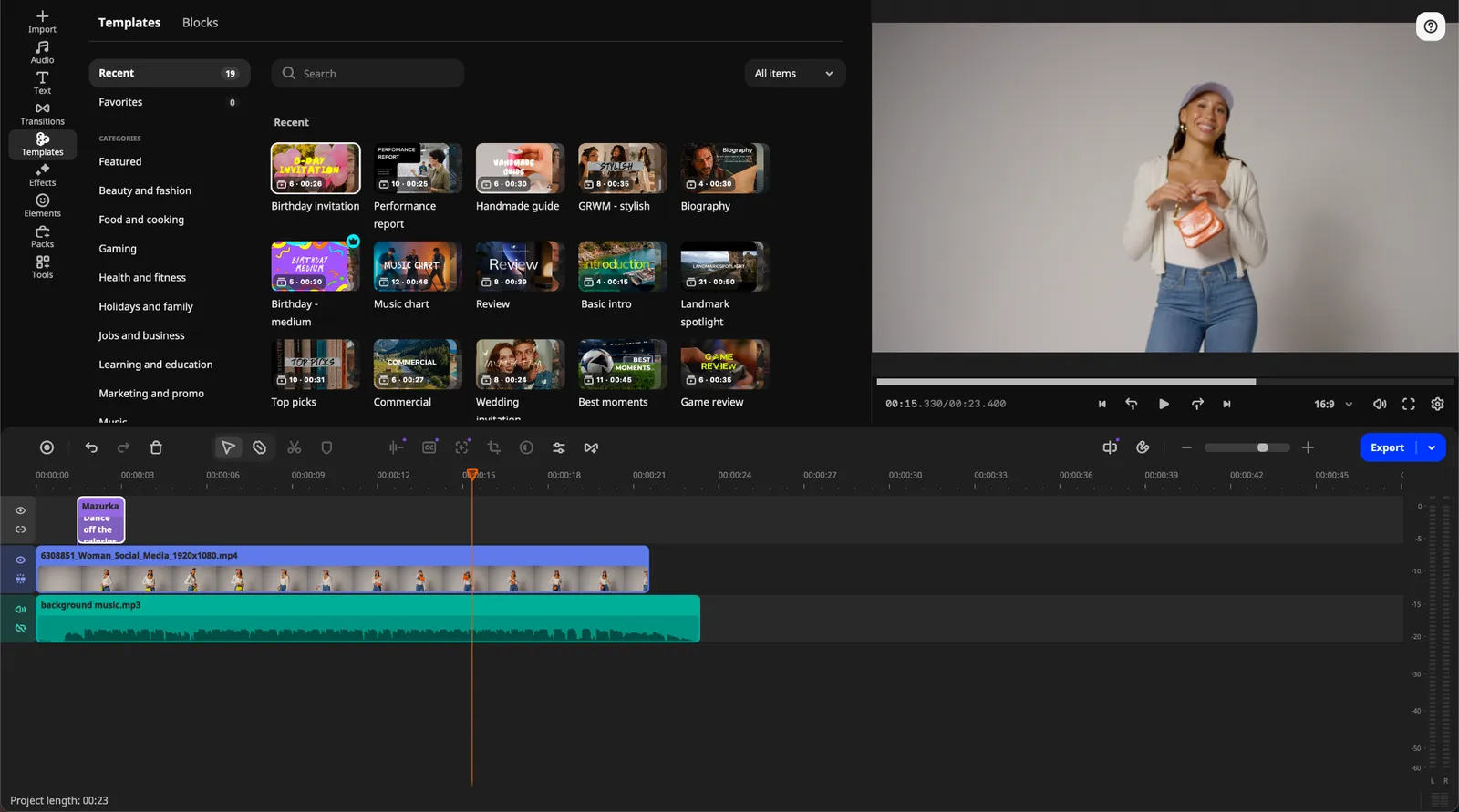
Movavi uses the familiar source-bin, preview, and timeline model. If you have edited before, you will feel at home quickly. If you haven't, it is the same model used across video editing, so the basics of importing media, trimming clips, arranging layers, adjusting audio, and exporting make sense from the first project.
The interface is approachable because the most common actions are visible and the timeline does not begin with a maze of workspaces. Built-in hints suggest the next step, effects and presets are applied by drag and drop, and hovering over a clip, transition, or effect previews it before you commit. It is a workflow designed to keep you editing rather than searching through menus.
Import and organization
Drag-and-drop import and a simple media collection keep projects tidy, and a pre-timeline trim lets you pull a short section out of a long recording before it lands in the project. That is especially handy for interviews, streams, and screen recordings, where you often need only a few minutes from a much longer file. For bigger projects, a consistent naming convention and folder structure make any editor faster to work in, and Movavi is no exception.
Timeline editing
Basic cuts, clip movement, transitions, overlays, titles, and audio placement are easy to understand, and you can see the story take shape without first configuring a specialized editing environment. The Blade tool makes frame-accurate cuts, and zooming into the timeline makes fine adjustments simple. If you are new to the application, the site's Movavi beginner guide walks through a first project.
Movavi Ideas
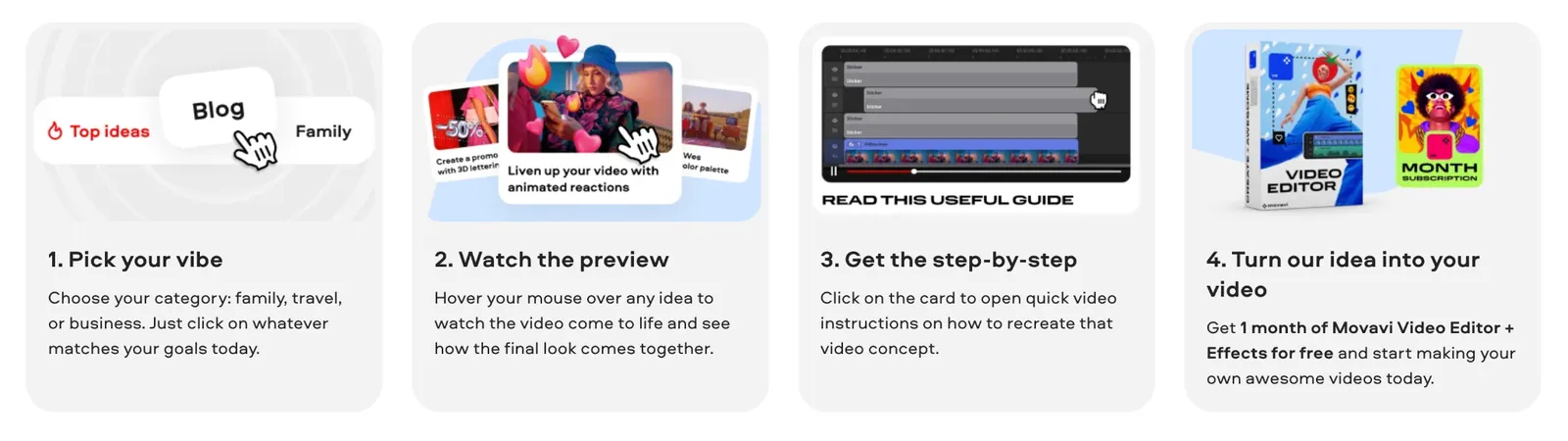
There’s also Movavi Ideas, a free tutorial hub of editing techniques made for Movavi Video Editor users. New ideas are added every week, and each one comes with a step-by-step tutorial that takes less than a minute to follow, covering techniques such as jump cuts, split screens, countdown timers, and stylized intros. It is a useful way to build a repertoire of moves without leaving the editing mindset for a long course.
Movavi Video Templates and Blocks
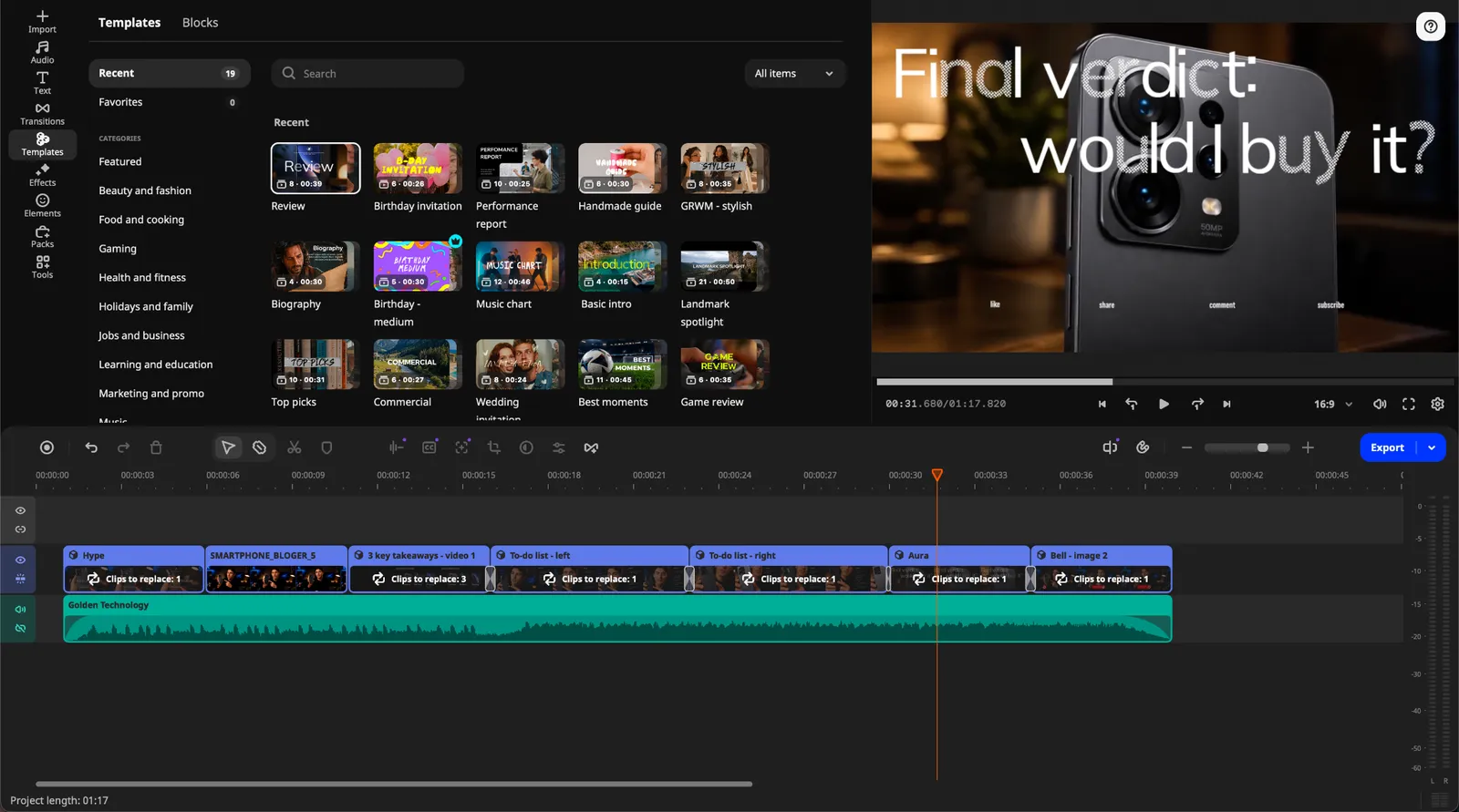
Movavi Video Templates is a multi-style library of customizable, pro-looking, modular templates for any kind of video. Each template arrives with the editing, music, transitions, and text already in place, but unlike a fixed template, it is made of Blocks: short pre-edited segments such as an intro, a countdown, a quick-cut sequence, or an animated collage.
That structure is what makes the templates useful to an editor rather than just a shortcut. You can reorder Blocks, add new ones, remove the ones that do not serve the story, or skip templates entirely and build a sequence from individual Blocks. Individual Blocks can be restyled as well, from their color scheme to the font and color of the text. Because the pacing and music inside each Block are already handled, even a first project looks professionally edited, and the result stays on the regular timeline for any manual adjustments you want to make.
Categories and availability
The library is organized by the kind of video you are making, with categories such as Vlog, Travel, Gaming, Food and cooking, Holidays and family, Jobs and business, Learning and education, and Marketing and promo. Typical uses include YouTube reviews and vlogs, slideshows, birthday and wedding videos, promo videos, video resumes, portfolios, and more. Several templates are included with the full version, and the complete library of templates and Blocks is available with a separate Movavi Templates subscription.
How useful are Movavi's AI tools?
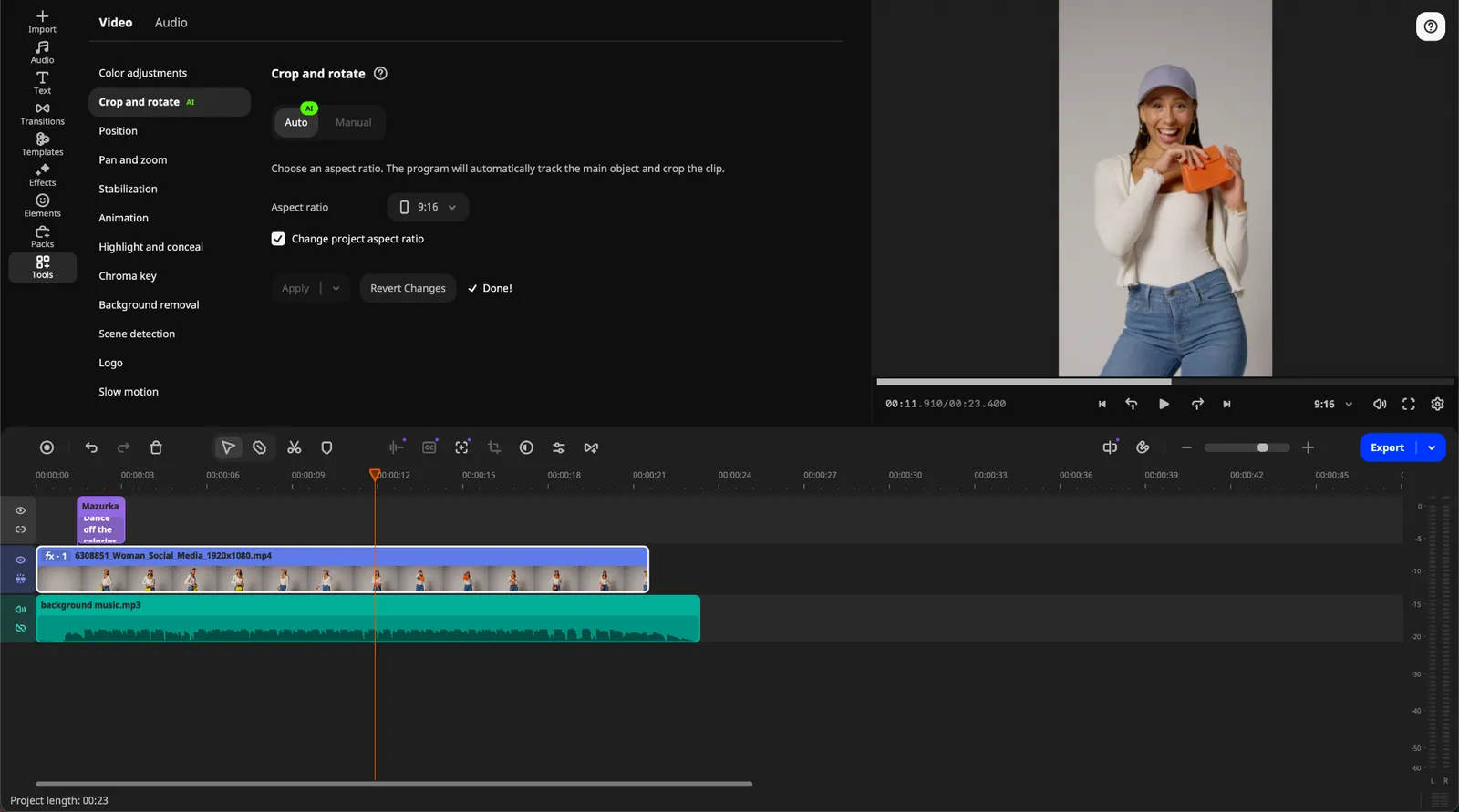
Movavi Video Editor includes a broad set of one-click AI tools: auto subtitles, auto-tracked cropping, video denoise, audio noise removal, silence removal, background removal, and motion tracking. AI-feature availability and any usage limits depend on the version and license; check the terms for your installed build. They take over the repetitive setup and cleanup, which leaves more time for the creative decisions.
Auto subtitles
Automatic subtitles recognize more than 100 languages and come with 60+ caption designs, including active word highlighting that syncs each word to the speaker. That saves substantial transcription time, especially for social and instructional work, and the captions remain fully editable if you want to adjust wording or styling.
Auto-tracked cropping and video denoise
Both are included in Movavi Video Editor 2027. Auto-tracked cropping arrived in version 26.10.0 on March 2, 2026, and video denoise in version 26.12.0 on March 30, 2026. Auto-tracked cropping follows the main subject and keeps a speaker or product centered while reframing, including when you convert horizontal footage to vertical for Shorts, Reels, or TikTok. AI video denoise reduces grain and low-light artifacts while preserving faces, textures, and edges, which makes it useful for dim interiors, older phone footage, and archival material, and as a cleanup step before chroma key work.
Background removal and motion tracking
Movavi's background-removal tool separates a person from the background without a green screen. It is useful for explainers, vertical video, picture-in-picture layouts, and quick branded backgrounds. Motion tracking attaches labels, callouts, and effects to a moving object, which is handy for tutorials and product videos.
Noise and silence removal
AI noise removal reduces steady background sound such as traffic, wind, hum, or a computer fan while keeping the voice clear. Silence removal finds pauses and cuts them automatically, with adjustable pause length and volume thresholds for more control. Together, they turn a raw talking-head recording into a tight, clean edit in a fraction of the time manual cleanup would take.
Filters, chroma key, titles, and Movavi Effects
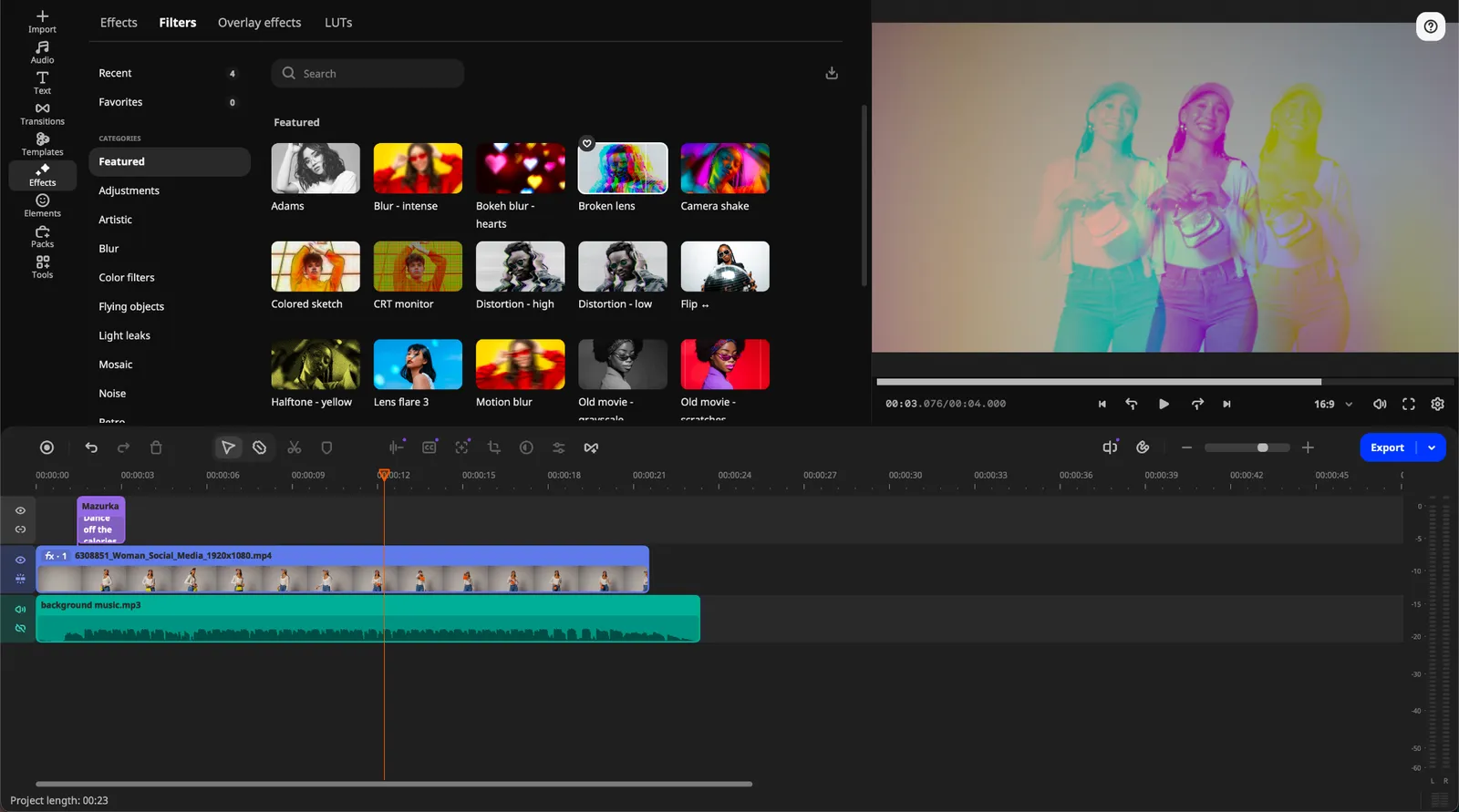
The creative tools in Movavi Video Editor cover the needs of YouTube, family, course, and social projects. Hundreds of built-in, drag-and-drop effects, transitions, filters, titles, and stickers are included. Filters establish a direction quickly, color correction offers both presets and manual controls, chroma key removes a green or blue background, and titles or stickers add structure and emphasis.
Use filters with intention
Filters work best once exposure and white balance are consistent, so start with a color preset or a quick manual adjustment, then add a filter and dial in its intensity until it supports the story.
Chroma key and background removal
The chroma-key controls are accessible, with adjustable tolerance, noise, and edge settings. Even lighting and some distance between the subject and the screen give the cleanest result. If you do not have a green screen at all, the AI background removal mentioned above covers the same need.
Titles, stickers, and effects
Movavi Video Editor includes hundreds of built-in, drag-and-drop effects, transitions, titles with flexible text and formatting settings, stickers, filters, and licensed music tracks and sounds, subject to their individual licenses. YouTube Content ID claims can still occur even when music is used under a valid license.
For a larger library, the Movavi Effects subscription adds more effects and music tracks. Any item can be previewed on your own footage for free, and even saved with a watermark before purchase, so it is easy to judge whether an asset suits the project.
Audio tools, social delivery, and export
Movavi's audio toolset goes further than its simple interface suggests. Beyond levels, fades, and music, there is an equalizer with savable presets, a compressor, a noise gate, reverb, beat detection for cutting to the rhythm, and one-click Sound autocorrect presets for voice recordings. That covers tutorials, interviews, and social videos without leaving the editor.
A few habits make any mix sound better: listen to dialogue through headphones and ordinary speakers, keep music below speech, and check the loudest moment before export.
Export quality
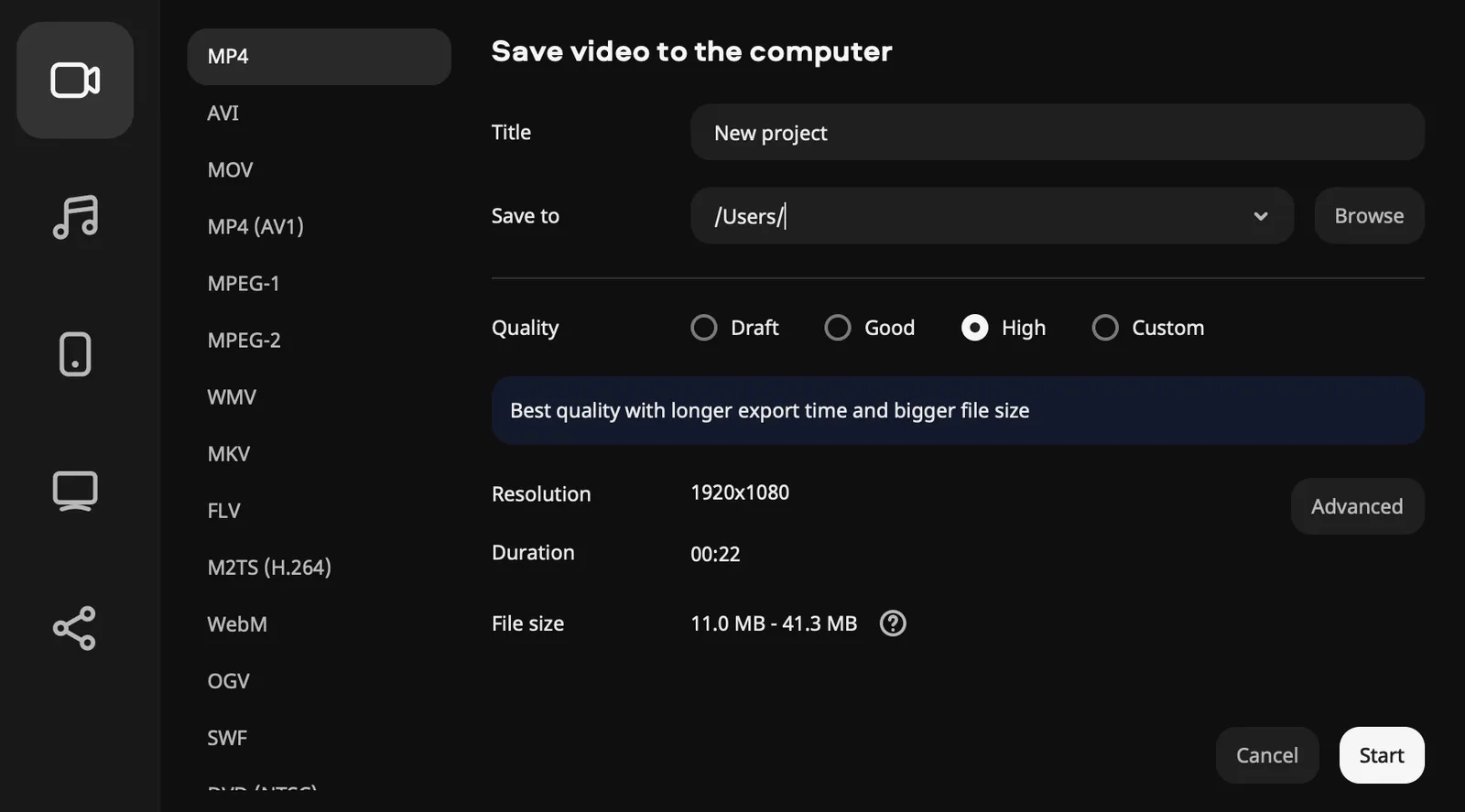
Movavi covers the delivery formats most projects need. Video can be saved as MP4, MOV, AVI, MKV, FLV, WMV, WebM, and more, with adjustable resolution, aspect ratio, and quality levels, and the export window estimates the file size before you start. If you only need the soundtrack, for a podcast version, a voiceover handoff, or a music bed, you can export audio on its own as MP3, WAV, AAC, WMA, OGG, or FLAC. Short loops and reactions can also be saved as animated GIFs.
For quick delivery, ready-made presets cover phones, tablets, game consoles, and TVs, while the H.264 settings offer two-pass encoding for more control over quality and file size.
Movavi Video Editor can also upload directly to YouTube, TikTok, Vimeo, and Google Drive, with service-specific upload settings in the export window. For platform-specific settings, see the Movavi social-video export guide.
Performance and compatibility
Movavi Video Editor has modest system requirements, so it runs comfortably on a wide range of computers. Current official requirements list Windows 10 or 11 64-bit and macOS 12 or later, with native support for ARM-based processors on Mac, including Apple M1 and newer devices, and 4 GB of RAM as the minimum. Fast Track HD acceleration works on lighter copies of HD footage while editing, then swaps back to the originals on export, which keeps playback smooth. For larger 4K projects, the site's 4K editing guide for Movavi has more tips.
Free version, pricing, and licensing
Movavi's lineup is flexible, so you can add only what your projects need:
- Free version. No time limit. It includes the essential editing tools along with auto subtitles, auto crop, and silence removal, and every other tool can be tried in the app. Exports are capped at 60 seconds, carry a watermark, are saved at lower quality (resolution limits vary by build), and support fewer codecs. Projects that use paid features cannot be exported.
- Lite. Core editing tools, auto subtitles, auto crop, silence removal, and all built-in effects, with a small watermark on exports and some advanced tools left out.
- Full version. Every feature and AI tool, with no watermark or export limits. Hundreds of effects and several templates are included, and it can be paid for monthly or annually.
- Movavi Effects and Movavi Templates. Optional subscriptions for the complete effects and template libraries.
Features and export restrictions depend on your version and license; check the limits shown in your installed build and the offer before purchasing. Client work, advertising, and business use require the appropriate Business license. Monetized YouTube videos made under a Personal license must state that they were created with Movavi and include a link to Movavi in the video description.
Is the free version really free?
Yes. The free version does not require payment details, and there is no time limit on using it. The limits apply at export, as described above, which makes it a straightforward way to explore the editor before upgrading.
Movavi Templates and Movavi Effects subscriptions
The full version already includes several templates and hundreds of built-in effects, so the two subscriptions are best treated as optional libraries rather than requirements. The Movavi Templates subscription unlocks the complete collection of templates and Blocks, covering everything from vlogs and business promos to holidays and family videos. Movavi Effects adds more than 10,000 effects and 1,500+ music tracks, and any of them can be previewed on your own footage for free before you decide.
Both subscriptions are managed separately from the main program license, so you can add one, both, or neither depending on the kind of work you do. If you post regularly and start most videos from a template, the templates library will likely save the most time; if you want a wider choice of titles, overlays, and music, Movavi Effects is the one to look at.
Movavi Video Editor alternatives
Editor | Consider it when | Main tradeoff |
|---|---|---|
iMovie | You use a Mac and need a simple free starting point | Fewer effects and less room to grow |
Final Cut Pro | You want a deeper Mac-native professional workflow | Higher learning and purchase commitment |
Adobe Premiere Pro | You need broad professional integration and collaboration | A more expensive subscription and greater complexity |
DaVinci Resolve | You want deep editing, color, audio, and finishing tools | More demanding interface and hardware expectations |
CapCut | Your priority is fast social-first editing and templates | Different privacy, platform, and long-form workflow considerations |
Choose the tool that fits the work you plan to make, not the editor with the longest feature page.
Final recommendation
Movavi earns its place as an approachable desktop editor for beginners and everyday creators. Its best qualities are clarity, fast access to common creative tools, customizable templates that handle pacing without locking you into one structure, and one-click AI tools that take care of routine work. Together, they move a beginner through a complete project to a result that looks professionally edited, and they save everyday creators real time on every video.
My recommendation is to start with the free version and build a short project with your own footage. If you make tutorials, YouTube videos, social clips, family projects, or business promos and want great-looking results without a steep learning curve, Movavi Video Editor is a sensible step up from a basic mobile or bundled editor.
Frequently asked questions
Is Movavi Video Editor good?
Yes, for beginners, everyday creators, educators, and small teams that want a visual timeline, customizable templates, and one-click AI tools without a steep learning curve. Editors who need the advanced, detailed controls of a professional post-production system will find more depth in a full professional suite.
Is Movavi Video Editor really free?
Movavi Video Editor offers a free version with no time limit. It includes the essential editing tools and lets you try every feature, while exports are capped at 60 seconds, watermarked, and saved at lower quality. The paid full version removes those limits.
Does the free version charge automatically?
No. The free version does not require payment details.
What are Movavi Video Templates?
They are a multi-style library of customizable, pro-looking, modular templates for any kind of video. Each one is made of Blocks, short pre-edited segments that you can reorder, add, remove, or restyle, or use on their own to build a video.
Does Movavi have AI tools?
Yes. Current tools include auto subtitles with word highlighting, auto-tracked cropping, AI video denoise, audio noise removal, silence removal, background removal, and motion tracking. AI-feature availability and any usage limits depend on your version and license.
Can Movavi edit 4K video?
Yes. Movavi works with 4K media, and lowering preview quality while editing, enabling hardware acceleration, and keeping footage on fast local storage help keep 4K projects smooth.
Does Movavi work on Mac and Windows?
Yes. Movavi Video Editor runs on Windows 10 and 11 (64-bit) and macOS 12 or later, with native support for ARM-based processors on Mac, including Apple M1 and newer devices.
Is Movavi better than Final Cut Pro or Premiere Pro?
Movavi is easier to learn and faster for straightforward edits, and its templates and one-click AI tools help beginners reach a great-looking result sooner. Final Cut Pro and Premiere Pro offer deeper professional workflows, media management, and collaboration options. The better choice depends on the work you actually deliver.

About the Author
Joseph Nilo has been working professionally in all aspects of audio and video production for over twenty years. His day-to-day work finds him working as a video editor, 2D and 3D motion graphics designer, voiceover artist and audio engineer, and colorist for corporate projects and feature films.