
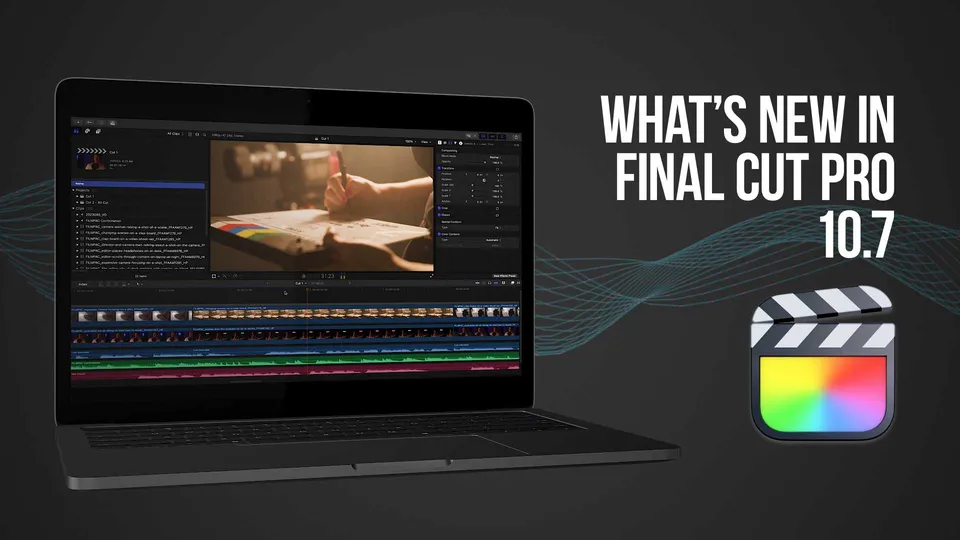
Final Cut Pro 10.7 is no longer the newest Final Cut Pro release, but several ideas from that update still matter: timeline organization, automatic timeline scrolling, object tracking improvements, and faster exports on Apple silicon. Treat this as a historical first-look refreshed for current editors, not as a current release announcement.
Quick Answer
Updated June 2, 2026: Final Cut Pro 10.7 was important because it improved timeline navigation, clip organization, object tracking, and H.264/HEVC export performance on Apple silicon. Those features are still useful, but current buying and workflow decisions should be based on Apple's current Final Cut Pro release notes and the current Mac version of Final Cut Pro.
Use this refresh this way
If you are researching 10.7: this page explains the features and why editors cared.
If you are using Final Cut Pro now: check Apple's current release notes before assuming this is the latest feature set.
If you are learning Final Cut Pro: focus on timeline organization, roles, connected storylines, and export workflow. Those ideas still matter.
For a current learning path, start with How to Learn Final Cut Pro. For performance work, pair this with Final Cut Pro performance optimization.
What Final Cut Pro 10.7 Added
Final Cut Pro 10.7 arrived as a workflow-focused update. It was not just a cosmetic release; it added practical editing controls that helped with long timelines, complex connected clips, object tracking, and Apple silicon export performance.
The original first-look video on this page covered the update when it was new. This refresh keeps the useful takeaways while removing launch-week language that made 10.7 sound current.
The main features worth remembering are automatic timeline scrolling, role-based clip highlighting in the Timeline Index, easier cleanup of overlapping connected clips, improved object tracking, and segmented processing for H.264 and HEVC exports on Apple silicon.
Automatic Timeline Scrolling
Automatic timeline scrolling is the kind of feature that sounds small until you cut a long project. During playback, the timeline can keep moving with the playhead so you do not constantly reposition the view while reviewing an edit.
That matters for documentary edits, podcasts, training videos, multicam sessions, and long social cuts where the edit needs repeated playback passes. Anything that helps you keep your eyes on the active section of the timeline reduces friction.
The current lesson is simple: learn timeline navigation early. Keyboard shortcuts, zoom control, markers, roles, and timeline scrolling all make Final Cut Pro feel less chaotic on larger projects.
Timeline Index and Connected Storylines
Final Cut Pro 10.7 also made organization easier by improving how editors could identify clips by role in the Timeline Index. Roles are not glamorous, but they are one of Final Cut Pro's best systems for keeping audio, titles, music, dialogue, effects, and captions organized.
The update also made it easier to collapse overlapping connected clips into a connected storyline. That helps when a section has titles, B-roll, effects, and audio stacked on top of the primary storyline.
If your timelines get messy, this is the 10.7 feature to care about most. A cleaner timeline is not just visual polish; it affects how fast you can revise, export, hand off, and troubleshoot.
Object Tracking and Export Changes
The 10.7 update included object tracking improvements, including a machine-learning model update. For editors, that made tracking more useful for common tasks like secondary color correction, effects, and keeping adjustments attached to moving subjects.
It also included segmented processing for H.264 and HEVC exports on Apple silicon. In plain English: Final Cut Pro could split export work into simultaneous segments on supported Macs, which helped export speed for common delivery codecs.
These are good examples of why Final Cut Pro updates can matter even when the headline feature is not flashy. Faster tracking and export workflows save time on repeated jobs.
What Aged Well
The organizational features aged best. Timeline scrolling, roles, Timeline Index work, and connected storyline cleanup are still core Final Cut Pro habits, regardless of which current version you are using.
The Apple silicon export emphasis also aged well. Editors still need to think about codecs, media engines, and Mac hardware, especially when exporting H.264, HEVC, HDR, or long-form deliverables.
The launch framing did not age as well. Any article that says "what's new" should make clear whether it is covering a current release or a historical update.
How to Think About It Now
If you already use Final Cut Pro, check Apple's current Final Cut Pro release notes and then decide which features matter to your actual work. Do not stop at the version number.
Current workflow checklist
Timeline: do you use roles, markers, and the Timeline Index consistently?
Performance: are slowdowns caused by hardware, codecs, libraries, plug-ins, or timeline organization?
Tracking: do you need object tracking for color, effects, callouts, or stabilization-style work?
Export: are you delivering H.264, HEVC, ProRes, HDR, social versions, or client-review files?
If your project problems are performance-related, read Optimizing Performance in Final Cut Pro. If you are handling phone footage, read iPhone HDR footage in Final Cut Pro. If you are comparing editing apps, use Final Cut Pro vs Premiere Pro.
Sources Checked
I checked Apple's current Final Cut Pro support and product pages while refreshing this post. Because Final Cut Pro version details can change, use Apple's release notes for the current feature list.
FAQ
Is Final Cut Pro 10.7 still the latest version?
No. This article is now a refreshed historical first look. Check Apple's current Final Cut Pro release notes for the newest version and current features.
What was the most useful Final Cut Pro 10.7 feature?
For many editors, automatic timeline scrolling and Timeline Index role highlighting were the most useful day-to-day improvements because they helped with long and complex timelines.
Did Final Cut Pro 10.7 improve exports?
Yes. Apple added segmented processing for H.264 and HEVC exports on Apple silicon, which helped supported Macs process common delivery codecs more efficiently.
Should I learn Final Cut Pro from old update posts?
Use old update posts for context, but learn from current workflows. Focus on media organization, roles, timeline navigation, color, audio, captions, and export settings.
About the Author
Joseph Nilo is a video editor, motion designer, and creator-focused educator who works across Final Cut Pro, Premiere Pro, After Effects, and practical post-production workflows.