
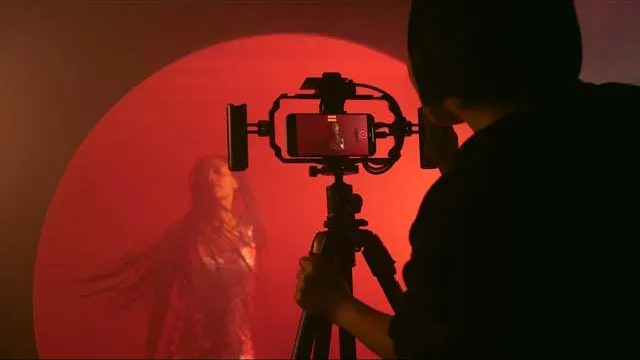
| Quick answer | The September 2023 Apple event still matters for video editors because it put ProRes Log, external USB-C recording, and ACES-aware color workflows into an iPhone that many creators already carry. It did not replace dedicated cinema cameras. It did make iPhone footage easier to use in serious Final Cut Pro, Premiere Pro, and DaVinci Resolve workflows when the shoot is planned correctly. |
|---|---|
| Best for | Creators, agencies, documentary shooters, and editors who need a compact camera that can cut into a larger Apple or Adobe workflow. |
| Skip if | You need long-form reliability, lens control, audio routing, ND filtration, and monitoring that are easier on a dedicated camera. |
| Watch first | Storage speed, cable quality, exposure, stabilization, and whether the edit will finish in HDR, SDR, or both. |
| Main takeaway | The iPhone became more credible as a B-camera and creator camera, not a universal replacement for pro camera systems. |
What Still Matters From Apple’s September 2023 Event
The most durable video-editing story from the event was not titanium or the Action button. It was the shift toward mobile capture that fits real post-production pipelines.
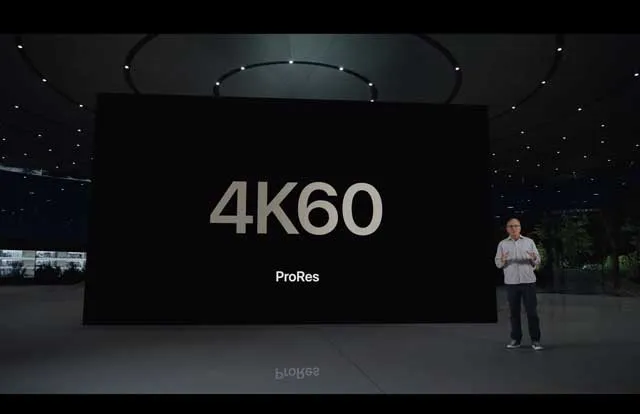
Apple’s own launch notes for iPhone 15 Pro highlighted ProRes recording to external storage, a new Log encoding option, USB 3 transfer speeds, and ACES support. Those are workflow features, not just camera spec-sheet items.
ProRes Log Changed the iPhone Conversation
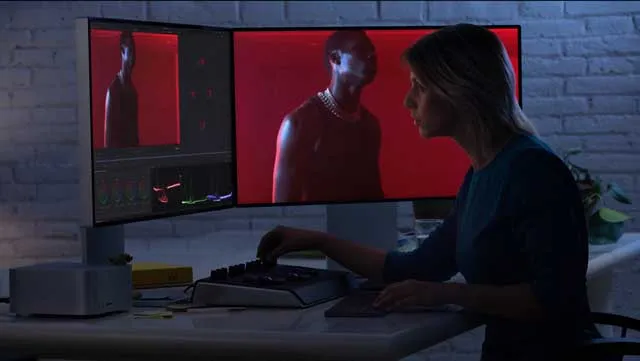
Before iPhone 15 Pro, an iPhone could already be useful for quick capture. ProRes Log made it easier to treat iPhone footage like material that belongs in a managed color workflow.
Apple says supported iPhone Pro models can record ProRes in HDR, SDR, or Log encoding, depending on the model. That matters because Log gives editors more room to balance contrast and color before the final look is applied.
Editing implication
Do not judge Apple Log footage while it is still flat. Apply the correct transform or LUT, balance exposure with scopes, then build the creative grade.
USB-C External Recording Is the Practical Upgrade
The useful part of USB-C was not just charging convenience. For video editors, it enabled direct ProRes recording to compatible external storage on iPhone 15 Pro and later Pro models.
Apple notes that ProRes files can be much larger than HEVC files, so external recording changes how realistic longer ProRes shoots can be. It also reduces the friction of moving footage into a desktop edit.
ACES Support Matters for Color Pipelines
Apple described iPhone 15 Pro as the first smartphone to support ACES, the Academy Color Encoding System. For most solo creators, that may sound abstract.
For editors and colorists, the meaning is practical: phone footage can be treated less like a mystery clip and more like a source that belongs in a defined color-managed workflow.
A Better Editor Workflow for iPhone Footage
For a small production, the clean workflow is simple: record ProRes Log when it is worth the storage cost, offload immediately, apply the correct transform, and finish in the delivery color space.
In Final Cut Pro HDR workflows, that means deciding early whether the project is staying HDR or being converted for SDR delivery.
If you are working in Adobe apps, the same principle applies: normalize the footage first, then grade. The mistake is treating Log as a filter instead of a capture format.
Where the 2023 Event Was Overhyped
The iPhone 15 Pro did not remove the need for lighting, sound, stabilization, camera support, and careful exposure. A cleaner codec does not automatically create a production-ready image.
For paid work, I would still choose a dedicated camera when I need lenses, rigging, reliable monitoring, timecode, ND, long record times, or a controlled audio path. I would use iPhone ProRes Log when speed, size, and flexibility matter more than a full camera build.
How I’d Use the iPhone 15 Pro Today
| Use Case | Worth Using iPhone ProRes Log? | Why |
|---|---|---|
| B-camera on a creator shoot | Yes | Small, fast, and easier to match when transformed correctly. |
| Long interview | Maybe | Useful in a pinch, but audio, heat, storage, and monitoring need planning. |
| Product b-roll | Yes | Great when lighting is controlled and the edit needs a polished grade. |
| Main camera for a client commercial | Only selectively | A dedicated camera is usually safer for optics, rigging, monitoring, and repeatability. |
Sources Worth Checking
Apple’s original iPhone 15 Pro announcement is still useful for the launch context.
For current recording limits and storage requirements, use Apple’s ProRes on iPhone support page rather than an old event recap.
FAQ
Is iPhone 15 Pro still useful for video editing workflows?
Yes. It is especially useful for creator work, b-roll, social production, documentary moments, and small-camera setups that benefit from ProRes Log and fast offload.
Does ProRes Log replace a cinema camera?
No. It improves iPhone footage for post-production, but dedicated cameras still offer better lens control, rigging, monitoring, audio, ND, cooling, and long-form reliability.
Do I need external storage for iPhone ProRes?
For short clips, internal storage can work. For longer or higher-frame-rate ProRes workflows, compatible USB-C external storage is often the practical option.
Should I shoot iPhone video in Log or HDR?
Shoot Log when you plan to color manage and grade the footage. Shoot HDR when the project is intentionally staying in an HDR pipeline and you understand the delivery requirements.
What was the biggest video editor takeaway from the Apple September 2023 event?
The biggest takeaway was that iPhone capture moved closer to normal post-production workflows through ProRes Log, external USB-C recording, and better color-management context.

About the Author
Joseph Nilo has been working professionally in all aspects of audio and video production for over twenty years. His day-to-day work finds him working as a video editor, 2D and 3D motion graphics designer, voiceover artist and audio engineer, and colorist for corporate projects and feature films.
Video Editing Related Posts
Adobe Creative Cloud for Video Editing
Top 10 Video Editing Software for Mac
The Benefits of Dual-Monitor Setups for Video Editing
How to Choose the Right Video Editing Monitor for Your Needs
Best Monitors for Video Editing
(Almost) 50 Mistakes Every New Video Producer Makes
Breakthrough AI Tools: Elevate Your Video Production Game!
Find the Best Export Settings for YouTube Videos Now!
Your Guide on Where To Find Video Editor Remote Jobs
Adobe video workflow guides
Final Cut Pro Related Posts
How to Create a Seamless Transition in Final Cut Pro
Mastering the Essentials: A Beginner's Guide to Final Cut Pro Keyboard Shortcuts
Optimizing Performance in Final Cut Pro
How to Work With iPhone HDR Footage in Final Cut Pro
All About the Final Cut Pro Student Discount
Video Editing Related Posts
Adobe Creative Cloud for Video Editing
Top 10 Video Editing Software for Mac
The Benefits of Dual-Monitor Setups for Video Editing
How to Choose the Right Video Editing Monitor for Your Needs
Best Monitors for Video Editing
(Almost) 50 Mistakes Every New Video Producer Makes
Breakthrough AI Tools: Elevate Your Video Production Game!
Find the Best Export Settings for YouTube Videos Now!
Your Guide on Where To Find Video Editor Remote Jobs
Adobe video workflow guides
Final Cut Pro Related Posts
How to Create a Seamless Transition in Final Cut Pro
Mastering the Essentials: A Beginner's Guide to Final Cut Pro Keyboard Shortcuts
Optimizing Performance in Final Cut Pro
How to Work With iPhone HDR Footage in Final Cut Pro
All About the Final Cut Pro Student Discount