
| Quick answer | Use Movavi stabilization as a rescue pass, not a replacement for steady shooting. Stabilize the clip, review the edges, then dial the settings back until the motion feels natural. |
|---|---|
| Best for | Handheld travel clips, family videos, quick social edits, tutorial b-roll, and lightweight creator projects. |
| Skip if | The shot has heavy motion blur, fast pans, rolling shutter wobble, or a subject that moves unpredictably through the frame. |
| Main rule | If stabilization makes the frame bend, zoom too far, or feel floaty, reduce the correction. |
Movavi can make shaky footage easier to watch, but the best result comes from restraint.
The goal is not to make every shot look locked to a tripod.
The goal is to remove distracting shake while keeping the motion believable.
Affiliate disclosure: This page contains affiliate links. I may earn a commission if you buy through them, at no extra cost to you.
Quick take: Movavi Video Editor is best for creators who want a friendly timeline, built-in effects, AI-assisted cleanup, and simpler exports without jumping straight into a professional editing suite.
Pricing and promotions change often, so check the current Movavi offer before buying.
Best fit: beginner and intermediate YouTube, social, tutorial, family, and small-business videos.
Start With the Right Clip
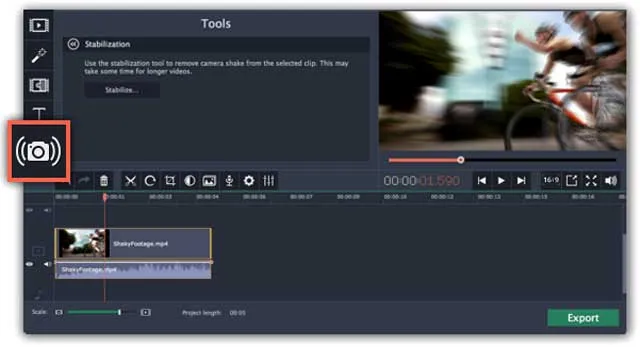
Choose the clip that has the cleanest subject movement before you open the stabilization controls.
A slightly wider shot usually stabilizes better because the software has room to crop.
- Trim the clip to the part you actually need.
- Apply stabilization to that shorter range.
- Preview at full size, not just in a tiny viewer.
- Watch the edges of the frame for warping or pulsing.
Tune Stabilization Settings by Eye
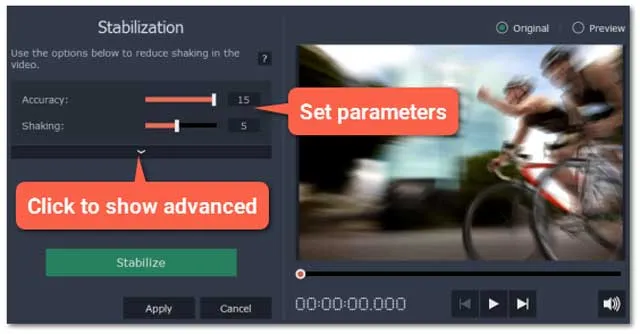
Start with a moderate correction and preview the shot in motion.
If the clip starts to feel rubbery, the setting is too aggressive.
Stabilization often introduces cropping, so make sure important faces, hands, text, or product details are not pushed out of frame.
Know When Not to Stabilize
Some footage is too broken to save cleanly.
Fast whip pans, low-light blur, and heavy rolling shutter can look worse after stabilization.
In those cases, cut around the shot, slow it down, use it briefly as texture, or replace it with cleaner b-roll.
| Problem | Better fix |
|---|---|
| Motion blur | Use a shorter portion or replace the shot. |
| Wobbling vertical lines | Reduce stabilization or cut away. |
| Cropped subject | Use a wider shot or reframe manually. |
Test stabilization on a real clip
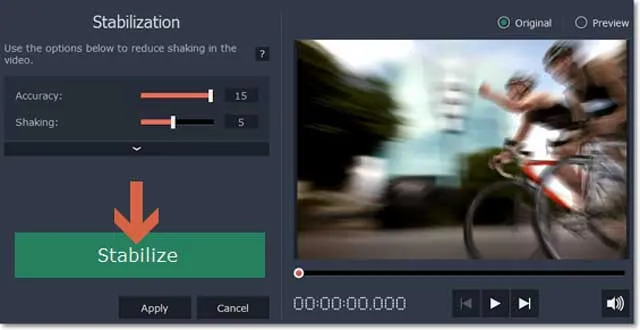
If Movavi's stabilization workflow fits your footage, review the current option after checking crop, sharpness, and motion on one representative clip.
FAQ
Can Movavi stabilize very shaky video?
It can help with moderate shake, but extreme shake, motion blur, and rolling shutter may still look distracting.
Should I stabilize before or after trimming?
Trim first. Stabilizing only the useful part of the clip saves time and makes the preview easier to judge.
Why does stabilized video look zoomed in?
Most stabilization needs some crop margin so the software can smooth movement without showing empty edges.
Is Movavi stabilization good enough for YouTube?
Yes for many creator and beginner projects, as long as the correction looks natural and the footage is not badly blurred.

About the Author
Joseph Nilo has been working professionally in all aspects of audio and video production for over twenty years. His day-to-day work finds him working as a video editor, 2D and 3D motion graphics designer, voiceover artist and audio engineer, and colorist for corporate projects and feature films.