
| Quick answer | Updated June 2026: Adobe Creative Cloud is worth it for photographers when you need Lightroom, Photoshop, Camera Raw, mobile/cloud sync, and a professional editing workflow in one ecosystem. |
|---|---|
| Best for | RAW editing, photo organization, portrait retouching, product photography, client delivery, mobile edits, and Photoshop finishing. |
| Current plans | Adobe lists Lightroom 1TB at US$11.99/month, Photography 1TB at US$19.99/month with Lightroom, Lightroom Classic, and Photoshop, and Creative Cloud Pro regularly at US$69.99/month with US$34.99/month intro promos sometimes shown. |
| Skip if | You only make casual phone edits, dislike subscriptions, or never need Photoshop-level retouching. |
| Main rule | Lightroom handles the library and most edits. Camera Raw develops RAW files for Photoshop. Photoshop handles detailed retouching and composites. |
For photographers, Adobe Creative Cloud is less about one app and more about the workflow between Lightroom, Camera Raw, and Photoshop.
Lightroom plan decision: If Lightroom is the main reason you are comparing photo plans, start with the Adobe Lightroom price guide before choosing a Photography or Creative Cloud path.
Photoshop plan decision: If Photoshop is the main reason you are comparing photographer plans, start with the Adobe Photoshop price guide before choosing a Photography or Creative Cloud path.
That workflow matters when you shoot RAW files, manage client sessions, retouch portraits, deliver consistent exports, or need to move from quick adjustments into detailed finishing.
The buying decision is not “does Adobe have good photo apps?” It is whether the Adobe photo ecosystem matches how you actually shoot, edit, archive, and deliver images. If you are choosing between Photoshop-only and the Photography plan, read the Photography Plan vs Photoshop Single App guide next.
This page may include affiliate links.
I only recommend software I would seriously evaluate for real creator or production workflows.
⭐⭐⭐⭐⭐
I pay for Adobe Creative Cloud and have used it every day in my 20-year career as a video editor, producer, and colorist.
Use the Adobe link below to check the current Creative Cloud offer. It can support this site and helps me keep these guides updated. Check current Adobe Creative Cloud offer.
Get Adobe Creative Cloud Now!
What Photographers Get in Creative Cloud
The core Adobe photo workflow usually starts with Lightroom, Lightroom Classic, Camera Raw, and Photoshop.
Lightroom is for organizing and developing photos. Lightroom Classic is still popular with desktop-first photographers who manage large local catalogs.
Camera Raw is the RAW processing engine that opens camera files into a Photoshop-first workflow. Photoshop is where you do detailed retouching, compositing, object removal, masking, design work, and layered edits.
My practical take: Adobe makes the most sense when you need both a fast photo workflow and a serious finishing tool. Lightroom alone is useful, but Lightroom plus Photoshop is the real reason many photographers stay.
When the edited work is ready to present, use my Adobe Portfolio pricing and Creative Cloud access guide to check whether a client-facing portfolio site is already included with your plan.
Which Adobe Plan Should Photographers Choose?
Adobe's plan names, storage amounts, and promotions change, so check Adobe directly before buying. As of this refresh, the practical choice is usually Lightroom 1TB, Photography 1TB, or Creative Cloud Pro.
| Plan direction | Current Adobe signal | Best fit | Watch out for |
|---|---|---|---|
| Lightroom 1TB | US$11.99/month, Lightroom plus Lightroom Classic, 1TB storage, and 250 monthly generative credits. | Cloud-first photographers who want cross-device Lightroom editing. | May not fit a Photoshop-heavy retouching workflow. |
| Photography 1TB | US$19.99/month, Lightroom, Lightroom Classic, Photoshop, 1TB storage, and 1,000 monthly generative credits. | Photographers who mainly need Lightroom and Photoshop. | Not the broadest Adobe app bundle. |
| Creative Cloud Pro | Regularly US$69.99/month, sometimes US$34.99/month for the first 3 months, 20+ apps, 100GB storage, and 4,000 monthly generative credits. | Photographers who also use Premiere Pro, Illustrator, InDesign, Express, Acrobat, or other Adobe apps. | Costs more if you only need photo tools. |
Lightroom, Camera Raw, and Photoshop Together
The cleanest Adobe photography workflow is simple.
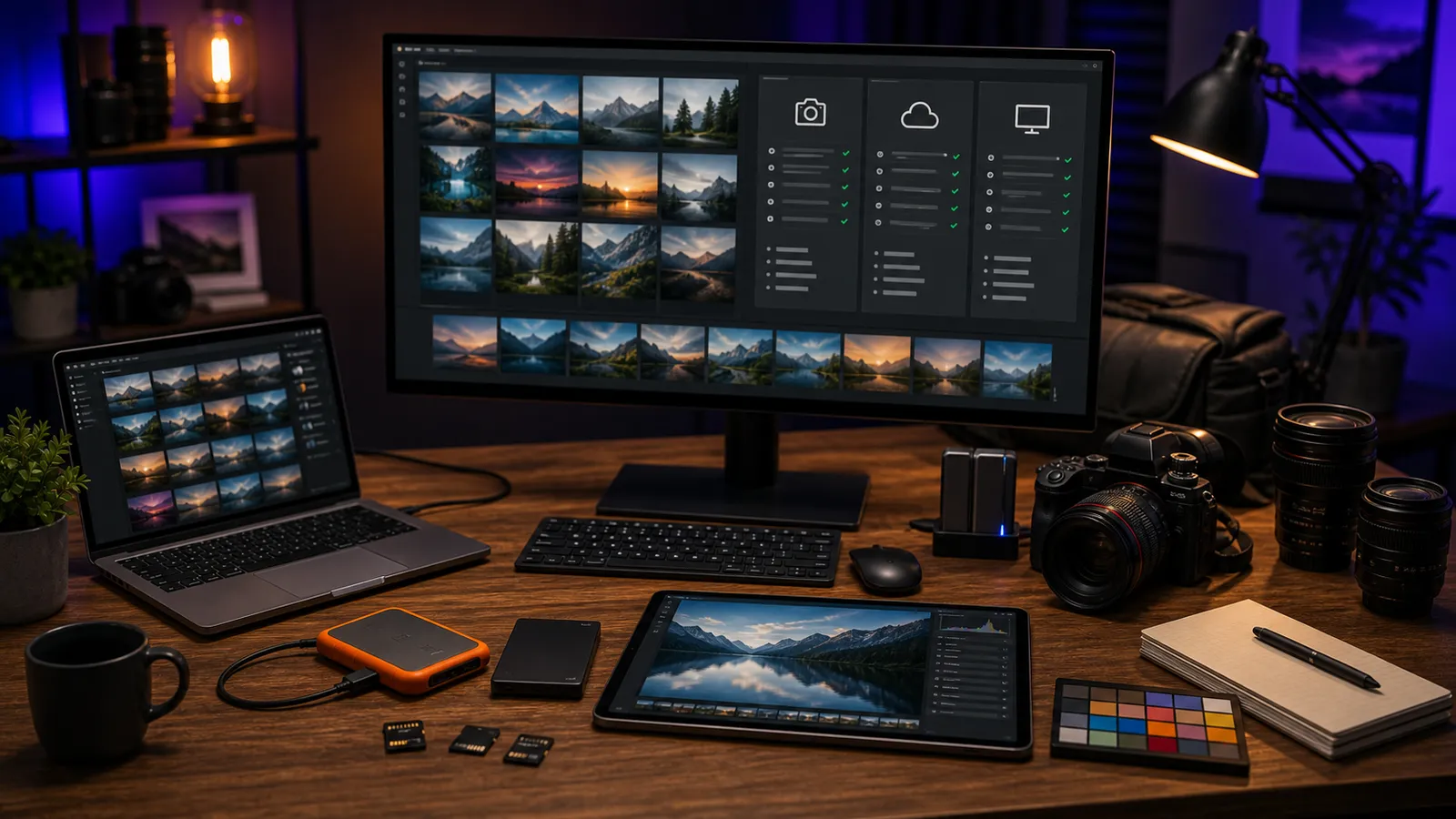
Start in Lightroom when you need to import, cull, rate, organize, and make broad RAW adjustments across a set.
Use Camera Raw when you are opening RAW files directly into Photoshop or Bridge. Use Photoshop when the photo needs retouching, compositing, advanced masking, product cleanup, or design work.
- Lightroom: library, RAW edits, presets, batch work, export workflow.
- Camera Raw: RAW processing for Photoshop-first workflows.
- Photoshop: detailed retouching, layers, composites, precision edits.
Do not buy All Apps just because it sounds more professional. If you only edit photos, compare the Photography plan first. Move to All Apps when video, design, layout, or broader content creation becomes part of your actual work.
Cloud Storage and Mobile Editing
Cloud storage is useful when you edit on more than one device, travel often, or want a simpler handoff between desktop, tablet, and phone. Adobe currently lists 1TB storage with the Lightroom and Photography plans, while Creative Cloud Pro is listed with 100GB.
It is less useful if you already maintain a large local archive on drives and prefer Lightroom Classic's catalog-based approach.
Before choosing a plan, decide where your originals live, how much you shoot, whether you need mobile editing, and how often you deliver images away from your main workstation.
My buying checklist: count the apps you truly use, estimate storage honestly, decide whether Photoshop is required, then choose the lowest plan that covers the workflow without forcing workarounds.
Who Should Buy Creative Cloud for Photography?
Adobe is a strong fit for photographers who care about RAW control, organized libraries, professional retouching, and reliable delivery.
It is especially useful for portrait photographers, wedding and event shooters, product photographers, real estate creators, YouTubers, marketing teams, and freelancers who need both photo and video tools.
It is weaker for casual creators who only want quick edits and do not want another subscription.
Where to Go Next
If you are still learning the tools, read what Adobe Lightroom does and what Adobe Camera Raw does.
If your photography work also includes video, see what Adobe Premiere Pro is used for and what Adobe Media Encoder does.
For the broader subscription decision, read Adobe Creative Cloud.
FAQ
Is Adobe Creative Cloud worth it for photographers?
It is worth it if you need Lightroom, Photoshop, RAW editing, retouching, organization, mobile sync, and professional exports. It may be too much if you only need casual edits.
How much is the Adobe Photography plan in 2026?
Adobe currently lists the Photography 1TB plan at US$19.99/month annual billed monthly. It includes Lightroom, Lightroom Classic, Photoshop, 1TB cloud storage, and 1,000 monthly generative credits.
How much is Lightroom by itself?
Adobe currently lists Lightroom 1TB at US$11.99/month annual billed monthly, with Lightroom for mobile, desktop, and web, Lightroom Classic, 1TB storage, and 250 monthly generative credits.
Do photographers need Photoshop if they have Lightroom?
Not always. Lightroom handles most photo development and organization. Photoshop becomes important for detailed retouching, compositing, product cleanup, masking, and layered edits.
Should photographers consider Creative Cloud Pro?
Only if they also need other Adobe apps such as Premiere Pro, Illustrator, InDesign, Acrobat, Express, or After Effects. Photo-only users should compare the Photography 1TB plan first.
Does Adobe include mobile photo editing?
Yes. Adobe lists Lightroom for mobile, desktop, and web in the Lightroom and Photography plans, with cloud storage for cross-device editing.
Sources

About the Author
Joseph Nilo has been working professionally in all aspects of audio and video production for over twenty years. His day-to-day work finds him working as a video editor, 2D and 3D motion graphics designer, voiceover artist and audio engineer, and colorist for corporate projects and feature films.
Related Posts:
Adobe Creative Cloud What Is Series
Adobe Creative Cloud Pricing Explained
Adobe Creative Cloud Pricing and Plans - The Ultimate Resource
Best Adobe Creative Cloud Apps for Graphic Design
How to Install Adobe Creative Cloud on Mac
Adobe Creative Cloud for Photographers
Adobe Creative Cloud for Video Editing
How to Use Adobe Creative Cloud Libraries
Adobe Creative Cloud Subscription Discount
Adobe Creative Cloud Student Discount
Adobe creator and buying paths
Adobe Creative Cloud for Video Creators
Adobe Photography Plan vs Photoshop Single App
Best Adobe Creative Cloud Apps for YouTubers
Adobe Express for YouTube Thumbnails
Adobe Stock Licensing for YouTube and Client Work
Adobe app explainers and storage
What Is Adobe Photoshop Elements?
What Is Adobe Premiere Elements?
What Is Adobe Character Animator?
Adobe Rush migration paths
Premiere Rush Discontinuation FAQ
Adobe Creative Cloud "What Is" Series:
What is Adobe Character Animator?
What is the Creative Cloud App?
What Is Adobe Photoshop Elements?
What Is Adobe Premiere Elements?
More Adobe app explainers