
Updated August 5, 2026
Adobe Photoshop is Adobe's pixel-based image editor for photo editing, compositing, retouching, selections, layers, typography, mockups, and production-ready image work. It is the right place to make an image look deliberate, not merely resized.
In 2026, Photoshop is still defined by its layer-and-mask workflow, but it also includes Firefly-powered generative tools, faster contextual controls, and handoffs to other Adobe apps. The useful question is not whether it can make an image; it is whether the job needs pixel-level control, nondestructive edits, and an editable source file.
Quick answer
Use Photoshop when a photo, composite, mockup, or raster graphic needs detailed control. It is strongest for retouching, removing distractions, changing backgrounds, creating layered social or campaign assets, preparing web imagery, and combining multiple source images without flattening the work too early.
Do not choose it by default for every visual task. Lightroom is faster for large photo libraries and consistent adjustments, Illustrator is better for logos and scalable vector art, and Adobe Express is better for fast template-led variations. Photoshop becomes worth its learning curve when the edit itself is the craft.
This page may include affiliate links.
I only recommend software I would seriously evaluate for real creator or production workflows.
⭐⭐⭐⭐⭐
I pay for Adobe Creative Cloud and have used it every day in my 20-year career as a video editor, producer, and colorist.
Use the Adobe link below to check the current Creative Cloud offer. It can support this site and helps me keep these guides updated. Check current Adobe Creative Cloud offer.
Get Adobe Creative Cloud Now!What Adobe Photoshop is
Photoshop is a raster-image editor. Raster files are made of pixels, which makes Photoshop particularly capable with photographs, scanned artwork, textures, screen graphics, detailed composites, and any image that will be judged at a specific output size.
The central idea is a document built from layers. Each layer can hold pixels, text, shapes, adjustment settings, masks, smart objects, or other editable pieces. Instead of permanently painting over a photograph, a good Photoshop workflow keeps the original available, uses masks to control where an edit appears, and saves an editable PSD or cloud document before exporting a JPEG, PNG, WebP, AVIF, or other delivery file.
That distinction is why Photoshop remains relevant when quick image editors are everywhere. A template tool can make an attractive graphic quickly. Photoshop gives a creator a repeatable way to inspect the edges, color, shadows, type, retouching, layers, and source assets when the result has to survive a client revision or a second use.
What Photoshop is best for
| Use Photoshop for | Why it fits | Consider another Adobe app when |
|---|---|---|
| Retouching and cleanup | Selections, masks, healing, Remove, adjustment layers, and precise pixel edits. | You only need a quick consistent treatment across a large library. |
| Photo composites and mockups | Layers, blending, shadows, color matching, and smart objects keep parts editable. | The deliverable must be a scalable logo or diagram. |
| Web, social, and campaign images | It can prepare final image sizes, exports, type, effects, and source versions. | Non-designers need safe brand variations from templates. |
| Textured artwork and digital painting | Brushes, filters, masks, and pixel layers support an image-first process. | You need natural stylus drawing or exact vector construction. |
| AI-assisted image exploration | Generative Fill, Expand, Remove, and related tools work inside a layered document. | You only need an ideation canvas before production. |
Photoshop is often the finishing room. A photographer may organize and balance a set in Lightroom, then send only the chosen files to Photoshop for careful retouching. A designer may build a logo in Illustrator, then use Photoshop to create a photorealistic product mockup. The app earns its place when the image needs individual attention.
The core Photoshop workflow: layers, masks, adjustments, and exports
New users usually get more value from four concepts than from memorizing every tool: layers, masks, adjustment layers, and smart objects. Together they make it possible to change direction without destroying the source.
Layers keep the pieces separate
Put the subject, background, type, color treatment, texture, and effects on separate layers whenever the parts might change independently. Name the layers for the job, not for the order in which they happened. “Product cutout,” “headline,” and “soft shadow” are far more useful six weeks later than “Layer 42.”
Masks hide instead of erase
A mask controls visibility. It lets you reveal or conceal part of a layer without deleting pixels. That is safer for a haircut, product edge, sky replacement, or local correction because the edge can be refined after feedback arrives.
Adjustment layers keep color decisions editable
Use adjustment layers for exposure, color, curves, hue, saturation, and similar corrections when possible. They can be changed, limited with a mask, reordered, or removed. Bake pixels only when the edit truly needs to become permanent.
Smart objects protect reusable sources
Smart objects are useful when an asset will be transformed, filtered, or reused. A product label or device screen can stay editable inside a mockup rather than becoming a soft, one-way transformation. Save the source PSD with its linked assets and fonts, then make delivery exports from a copy or a controlled export preset.
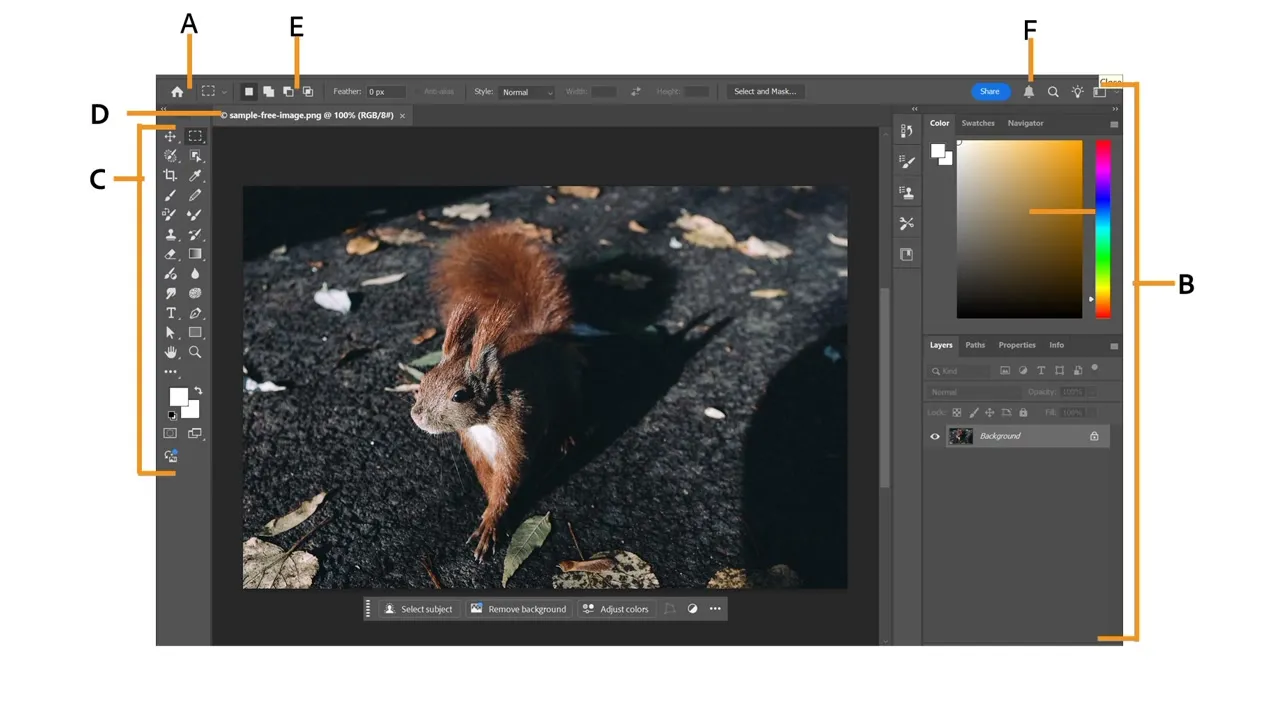
Adobe's current workspace guide identifies the document window, tools, options bar, and panels that support an editable image workflow. Source: Adobe. Interface shown as documented by Adobe and may change.
Photoshop and Firefly AI: useful tools, not automatic approval
Adobe's current Photoshop documentation groups Generative Fill, Generative Expand, Generate Image, Generate Background, Generate Similar, Harmonize, and Generative Upscale among its AI-assisted image features. Recent desktop releases also added options around model selection, on-device processing for some Remove-tool work, contextual Actions, Dynamic Text, and a Photoshop-to-Firefly-Boards handoff.
These are workflow tools, not a substitute for visual review. Generative Fill can remove or replace an object, Generative Expand can extend a canvas, and Harmonize can help an inserted object sit in a scene. But a creator still needs to check edges, lighting direction, shadows, reflections, anatomy, typography, brand details, licensing, and whether the result says something true.
Use AI as a first pass or a controlled exploration layer. Keep the original, isolate the generated edit on a layer or in a versioned document, and do not flatten before the client or stakeholder has approved the direction. Credits, available models, and processing options can vary by plan, region, and release, so the signed-in product screen is the final source for a specific account.
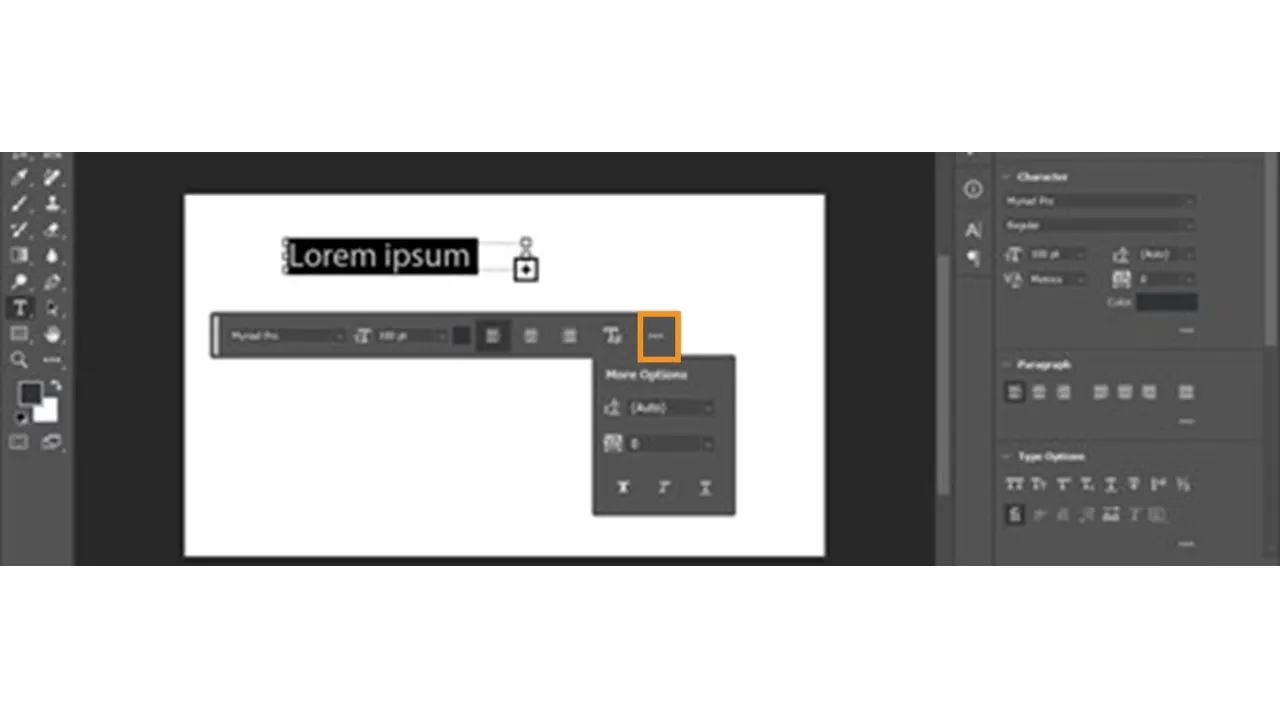
Photoshop's Contextual Task Bar surfaces relevant actions near the active tool or selection; the controls shown can change by task and release. Source: Adobe. Interface shown as documented by Adobe and may change.
Photoshop vs Lightroom
Choose Lightroom when the job is a library. It is designed to import, organize, rate, filter, batch-adjust, and synchronize a group of photographs. A wedding, event, travel shoot, or product catalog often needs Lightroom first because consistency and selection matter more than building complex layers in every file.
Choose Photoshop when the job is an individual image. Detailed retouching, composites, advanced cleanup, product mockups, layered text, background work, precise selections, and pixel-level fixes are where Photoshop becomes the better owner.
The two apps work well together. A practical photography workflow is to select and apply broad corrections in Lightroom, then send the few keeper images to Photoshop for difficult edits. Avoid creating two competing masters of the same image; decide which application owns the catalog and which owns the layered finishing file.
Photoshop vs Illustrator
Photoshop and Illustrator are both creative tools, but their drawing models are different. Photoshop handles pixels. Illustrator handles vectors: paths, anchors, strokes, fills, type, artboards, and scalable geometry. A logo, icon set, diagram, or SVG should normally begin in Illustrator because it needs to scale and remain precise.
Photoshop is better for the image around that logo: the photo composite, texture, retouched campaign image, product scene, social crop, or realistic mockup. Illustrator can supply the vector artwork, and Photoshop can place it as a smart object so it remains editable while the surrounding image is finished.
If the choice feels unclear, ask what happens when the artwork must become ten times larger. If it should stay exact, begin in Illustrator. If it is a photo or painted image whose final quality depends on pixels, begin in Photoshop.
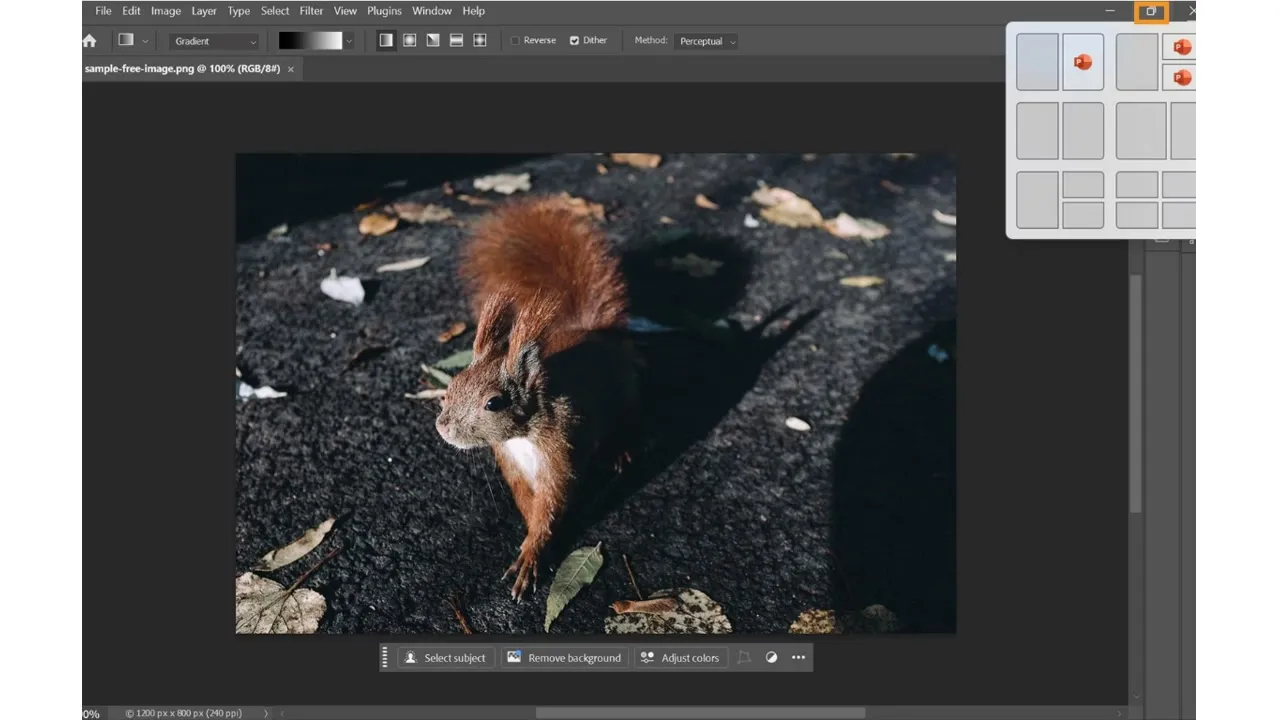
Adobe documents flexible Photoshop workspaces so panels, tools, and windows can be arranged around the work rather than treated as a fixed screen. Source: Adobe. Interface shown as documented by Adobe and may change.
Photoshop pricing and plan fit
Photoshop is a subscription product, so the buying decision should follow the workflow rather than an introductory offer. A single-app Photoshop plan can make sense when Photoshop does the paid work. The Photography plan can be a better fit when Lightroom is equally important. A broader Creative Cloud plan becomes easier to justify when projects repeatedly cross Photoshop, Illustrator, InDesign, After Effects, Premiere, Acrobat, Express, or Firefly.
Check the regular renewal amount, regional terms, storage allowance, generative-credit rules, and included apps in the exact signed-in offer before buying. Adobe changes plan names, promotions, and entitlements, so a static price in an evergreen overview would be less useful than a current decision process.
For a deeper purchasing comparison, use the separate Photoshop price guide. Before subscribing, test one representative paid job: open real source images, use the tools you need, confirm the export formats, create a layered master, and check how the files fit your collaborators' workflow.
Who should use Photoshop?
Photoshop is a good fit for photographers, video creators making thumbnails or key art, designers building campaign imagery, marketers who need controlled production files, e-commerce teams creating product scenes, artists combining paint and pixels, and anyone whose image work needs to remain editable after the first export.
It is less compelling for a person who only needs a few template-based graphics, a large batch of library corrections, a simple cropped photo, or a scalable logo. The best tool is the one that keeps the source usable and the revision path calm.
Build a small file-hygiene habit around it. Keep the raw or original image, the editable PSD, a clearly named review export, and the final delivery export in predictable locations. That simple separation makes it much easier to identify what changed and to return to the source when a client requests another crop, version, or correction.
My recommendation: learn a small non-destructive workflow before chasing advanced effects. Make one file with named layers, masks, adjustment layers, and a separate export. Once that becomes natural, newer AI and automation features can speed up real work instead of creating an uneditable mystery file.
Official Adobe sources
Frequently Asked Questions
What is Adobe Photoshop used for?
Photoshop is used for detailed photo editing, retouching, image cleanup, composites, mockups, pixel graphics, layered campaign images, and controlled exports. It is strongest when the image needs editable layers and precise revision.
Is Photoshop only for photographers?
No. Photographers use it for detailed finishing, but designers, marketers, e-commerce teams, video creators, illustrators, and artists also use Photoshop for image-based production work.
What is the difference between Photoshop and Lightroom?
Lightroom is optimized for organizing and consistently adjusting a photo library. Photoshop is optimized for detailed work on individual images using layers, masks, selections, retouching, compositing, and pixel-level edits.
What is the difference between Photoshop and Illustrator?
Photoshop edits pixels and is best for photos, textures, composites, and raster graphics. Illustrator edits vectors and is better for logos, icons, diagrams, SVGs, and artwork that must scale precisely.
Can Photoshop remove or replace objects with AI?
Photoshop includes AI-assisted tools such as Generative Fill, Remove, Generate Background, and related features. Review the result carefully for edge quality, lighting, shadows, artifacts, factual accuracy, and rights before delivery.
Do I need to learn every Photoshop tool?
No. Start with layers, masks, adjustment layers, selections, smart objects, type, and controlled export. Those concepts make later tools easier and protect the edit from becoming destructive.
Does Photoshop have a one-time purchase option?
Photoshop is generally sold as a subscription. Plan names, promotions, regional pricing, included apps, storage, and generative-credit terms can change, so verify the current signed-in Adobe offer before purchasing.
What file format should I save in Photoshop?
Keep an editable PSD or cloud document as the production master, then export a delivery format such as JPEG, PNG, WebP, AVIF, or TIFF based on the destination. Preserve source files, fonts, and linked assets for work that may be revised.

About the Author
Joseph Nilo has been working professionally in all aspects of audio and video production for over twenty years. His day-to-day work finds him working as a video editor, 2D and 3D motion graphics designer, voiceover artist and audio engineer, and colorist for corporate projects and feature films.