

Adobe cloud storage is tied to your exact plan. There isn't one universal storage price, and there isn't one add-on that every Adobe customer can buy.
Updated August 3, 2026. I checked Adobe's current individual, Lightroom, teams, enterprise, cancellation, and storage-help pages. Your signed-in checkout is still the final word on an account-specific upgrade.
This page may include affiliate links.
Though I only recommend software that I use and fully believe in.
⭐⭐⭐⭐⭐
I pay for Adobe Creative Cloud and have used it every day in my 20-year career as a video editor, producer, and colorist.
Use the Adobe link below to check the current Creative Cloud offer. It can support this site and helps me keep these guides updated. Check current Adobe Creative Cloud offer.
Get Adobe Creative Cloud Now!Quick answer
Creative Cloud Standard and Creative Cloud Pro for individuals currently include 100GB. Adobe's general Single App offer also lists 100GB, with some product-specific exceptions. The current Lightroom and Photography plans each include 1TB.
If you need more space, sign in and check the choices attached to your plan. Sizes and prices can change by product, region, billing schedule, and purchase channel.
I use Adobe apps every day for video and post-production, and I think of this storage as active working space. It's useful for cloud documents, Lightroom sync, Libraries, Adobe Express files, and collaboration. I don't use it as the only long-term home for camera originals, completed projects, masters, or backups.
Current Adobe plan storage
These are the clearest current amounts on Adobe's plan and help pages. I'm leaving dollar prices out because Adobe's public pages and signed-in offers can differ.
| Plan or account | Storage | What to know |
|---|---|---|
| Creative Cloud Standard | 100GB | The current individual Standard plan. |
| Creative Cloud Pro | 100GB | Higher-storage choices may appear in your Adobe account. |
| Creative Cloud Single App | Usually 100GB | Don't assume every product follows that number. Lightroom and some Acrobat plans differ. |
| Lightroom | 1TB | The current plan includes Lightroom on desktop, mobile, and web, plus Lightroom Classic. |
| Photography | 1TB | Includes Lightroom, Lightroom Classic, and Photoshop. |
| Legacy Photography | 20GB | Unavailable to new customers since January 15, 2025. |
| Free membership after cancellation | 5GB | If you're over 5GB, Adobe gives you a limited window to reduce usage. |
I wouldn't quote one monthly storage add-on price. Adobe does not publish a stable price per terabyte that applies to every account. The reliable number is the one in your signed-in checkout.

Check current Creative Cloud plan details
If you're comparing the apps as well as storage, my Creative Cloud plan guide covers the larger subscription decision. The Adobe discount guide covers legitimate ways to lower the bill without relying on mystery coupon sites.
What counts toward Adobe cloud storage?
Adobe's current storage tracker says several services can contribute to the total:
- Creative Cloud cloud documents
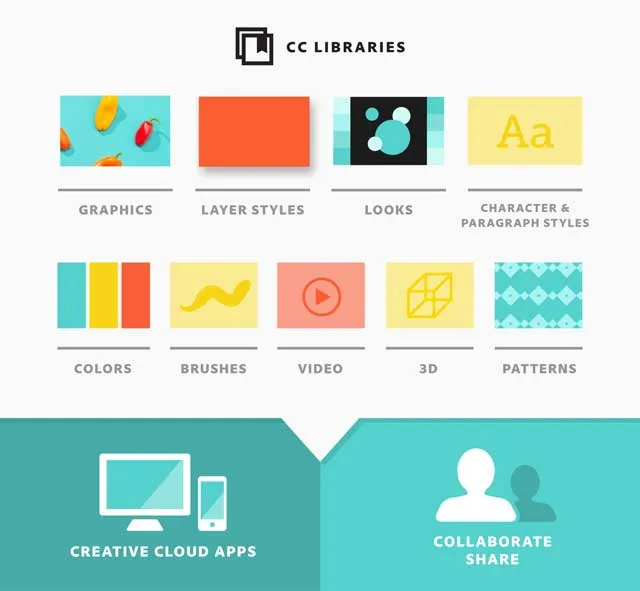
- Creative Cloud Libraries and Photoshop presets
- Files sitting in Deleted
- Lightroom photos and videos
- Document Cloud files
- Adobe Express projects, brand files, graphics, web pages, and videos
Deleted is an easy one to miss. Removing a cloud document normally moves it there, but the file can keep using storage until you delete it permanently.
Cloud documents someone else shares with you do not count toward your quota. Adobe also lists synchronization limits of 350,000 files and 150,000 folders for supported synchronized content.
One terminology change matters: Adobe ended the old generalized Creative Cloud Synced Files service by February 3, 2025. That was the Dropbox-style service built around a local Creative Cloud Files folder.
Cloud Documents, Libraries, Lightroom cloud storage, and Frame.io are still supported, but they are separate tools with different jobs. Calling all of them “Creative Cloud file sync” makes the current setup sound much simpler than it is.
How I'd choose a storage upgrade
Before spending more, I'd do this in order:
- Open the Creative Cloud desktop app and check Cloud activity, or sign in to Adobe Home and look under Files.
- Open Deleted and permanently remove anything you know you don't need.
- Find the real space hog: Lightroom originals, cloud documents, Libraries, Express projects, or Document Cloud files.
- Move completed projects and large archives to the storage system you already use for long-term backup.
- Open Adobe Account, choose Manage Plan, and compare the upgrade choices for that account.
Adobe references larger Lightroom bundles, including 3TB, 10TB, and 20TB options. Its legacy Photography documentation lists different 2TB, 5TB, and 10TB choices for some older accounts. That's why I wouldn't treat one upgrade list as universal.
If all you need is space, compare the actual Adobe upgrade with an external drive, NAS, or storage-first cloud service. A larger Adobe plan can make sense when you also need its apps or Lightroom workflow. It may not make sense if you're parking finished video projects.
Fast storage decision
- Need Lightroom sync or cloud documents? Start by checking the storage already included with your plan.
- Editing large video projects? Keep active Adobe assets in Creative Cloud, but archive camera originals, exports, and backups outside Adobe.
- Choosing a plan? Compare the main Creative Cloud plans before you pay for more storage.
Check current Creative Cloud plan details or read my Adobe pricing breakdown.
Lightroom storage is a little different
Lightroom and Lightroom Classic use storage in different ways.
Lightroom is cloud-focused. When you import photos, it stores the full-resolution originals in Adobe's cloud so they're available on desktop, mobile, and the web. You can keep local copies too, but the cloud sits at the center of the workflow.
Lightroom Classic is desktop-focused. Your originals live on your drive. When you sync selected photos, mobile and web access use lower-resolution Smart Previews instead of moving the whole Classic library of originals into Adobe storage.
The current Lightroom plan includes 1TB and Adobe lists Lightroom Classic with it. Photography also includes 1TB and adds Photoshop. The older 20GB Photography plan is now a legacy plan for existing subscribers.
When Lightroom reaches its storage limit, the desktop app can still import photos. The catch is that new imports stay local. They are not backed up to Adobe, they do not appear in Lightroom mobile or web, and cloud-based object search is unavailable for them.
Even when I use Lightroom's cloud storage, I keep another copy of important originals. Sync is handy, but I don't like making one account my only recovery plan.
Teams and enterprise storage
Adobe's current US teams page lists 1TB per user for Creative Cloud Single App and Creative Cloud Pro for teams. That storage is pooled at the company level.
There is a regional exception. Creative Cloud Standard for teams is available in select countries with 100GB, while Pro and Pro Plus list 1TB. That makes “every teams plan includes 1TB” unsafe as a worldwide claim.
Enterprise storage depends on the licenses and contract an organization buys. Storage is pooled, and Adobe directs enterprise customers to their account manager for additional capacity.
Frame.io is separate. Files uploaded there use a dedicated Frame.io quota, not the 100GB or 1TB attached to a Creative Cloud plan.
What happens if storage is full or you cancel?
If you cancel or downgrade a paid Creative Cloud membership, Adobe says the account moves to a free membership with 5GB. Local files stay on your computer and remain yours.
If the account is using more than 5GB, you cannot upload new files until you reduce the total. Adobe gives you 30 days to free space before access to some or all server-stored files may be affected.
I wouldn't wait for that deadline. Download anything important before canceling and check that the downloaded files open. My Creative Cloud cancellation guide covers the plan side of the decision.
My practical Adobe storage workflow
For day-to-day work, I'd keep active cloud documents, Libraries, Lightroom sync, Adobe Express assets, and files I genuinely need across devices inside Adobe's storage.
For video work, I'd keep camera originals, cache files, large renders, exported masters, and completed project archives on local or external storage designed for that job. A NAS or dedicated backup cloud often makes more sense for long-term media than repeatedly expanding a Creative Cloud plan.
I also treat Frame.io as its own review system. Its storage is useful for uploads, client comments, approvals, and handoff, but it doesn't increase the Creative Cloud number shown in Adobe Account.
The simple rule: use Adobe storage for the Adobe workflows it makes easier. Use your archive and backup system for files you need to keep no matter what happens to an Adobe subscription.
Adobe cloud storage FAQ
How much Adobe cloud storage do I get?
It depends on the plan. Creative Cloud Standard and Pro for individuals currently include 100GB. Adobe's general Single App offer also lists 100GB, while Lightroom and Photography currently include 1TB. Check your signed-in Adobe account for the amount attached to your subscription.
Is Adobe cloud storage unlimited?
No. Every plan has a quota, and Adobe also publishes file and folder limits for synchronized content. I treat it as active creative workspace storage, not unlimited backup space.
Can I buy more Adobe storage?
Sometimes. Supported accounts can switch to a plan with more storage through Adobe Account. Available sizes and prices depend on the plan, region, and account, so there is no universal add-on price I can quote.
Which Adobe plan includes 1TB?
The current Lightroom and Photography plans for individuals both include 1TB. Photography adds Photoshop. Current US Creative Cloud teams plans generally include 1TB per user, although a 100GB Standard plan exists in select markets.
What happens when Adobe cloud storage is full?
You need to free space or choose an available upgrade before adding more cloud content. Permanently deleting items from Deleted can recover space. In Lightroom, new desktop imports can remain local, but they will not be backed up or available on mobile and web.
Does Frame.io use my Creative Cloud storage?
No. Frame.io uses its own dedicated storage quota. An eligible Creative Cloud account may include a separate Frame.io allowance, but Frame.io uploads do not consume the 100GB or 1TB quota discussed here.
Official Adobe sources
I checked these Adobe pages on August 3, 2026:
- Creative Cloud plans and included storage
- Creative Cloud Standard and Pro comparison
- Current Lightroom and Photography plans
- Photography plan and Lightroom storage FAQ
- What counts toward Adobe cloud storage
- Cloud-document storage and sharing behavior
- Check and upgrade Creative Cloud storage
- Creative Cloud Synced Files discontinuation
- Storage and files after cancellation
- Creative Cloud for teams plans
- Regional Standard for teams storage
- Enterprise storage quotas and limits
- Frame.io for Creative Cloud FAQ

About the Author
Joseph Nilo has been working professionally in all aspects of audio and video production for over twenty years. His day-to-day work finds him working as a video editor, 2D and 3D motion graphics designer, voiceover artist and audio engineer, and colorist for corporate projects and feature films.