

I use Premiere for paid work because my projects regularly move through After Effects and the rest of Creative Cloud. That does not make it the automatic answer for every Mac editor.
If I wanted a Mac-only editor without a required monthly payment, I would choose Final Cut Pro. DaVinci Resolve is my pick for the strongest free professional toolset. iMovie is the easiest place to start, while Filmora works best for quick, template-heavy edits.
Updated August 3, 2026. I checked current versions, prices, and Mac requirements against the official product pages linked below. Prices and requirements can change, so check the final checkout and compatibility page before paying.
Quick picks
| Editor | My pick for | Current price model | Main catch |
|---|---|---|---|
| Adobe Premiere | Paid work, Adobe workflows, and cross-platform teams | $22.99/month for the individual single-app annual plan, billed monthly | Ongoing subscription |
| Final Cut Pro | Mac-only editing and a fast one-time-purchase workflow | $299.99 once, or included with Apple Creator Studio | Mac-only, with some newer tools limited to Apple silicon |
| DaVinci Resolve | The best free path into professional editing and color | Free; Studio is $295 | More to learn and more demanding on hardware |
| iMovie | A first edit, family video, or simple 4K project | Free from the Mac App Store | You can outgrow its timeline and finishing tools |
| Filmora 15 | Quick social, tutorial, and template-driven edits | Free trial; annual and version-limited perpetual plans | AI credits, assets, and renewals make plans harder to compare |
How I chose these five
I'm not ranking these from one export test. I looked at what each editor is good at, how quickly you can get comfortable, what it costs, current Mac support, and how easy it is to share a project.
I also think about how hard it would be to switch later. A familiar editor can save hours every week, while a subscription or Mac-only project can make moving harder. Pick the app that fits the next several projects you expect to finish, not the one with the longest feature list.
1. Adobe Premiere: best for my paid work
Premiere is still the editor I reach for when a project needs to move through After Effects, Audition, Photoshop, or another editor's system. It runs on Mac and Windows, which matters when a client or collaborator does not use the same computer I do.
The current desktop release is Premiere 26.3. Adobe's individual single-app plan is $22.99 per month on an annual commitment billed monthly. The plan includes 100GB of cloud storage, Frame.io, and Adobe Express Premium. Adobe also offers a seven-day trial. Premiere is subscription-only; Adobe does not sell a perpetual desktop license.
Why I recommend it
- Strong handoff with After Effects and the wider Adobe toolset.
- Cross-platform projects are easier when a team uses both Mac and Windows.
- Frame.io review tools are included with the current individual plan.
- The traditional track-based timeline is familiar to many working editors.
The drawback
The subscription is the obvious downside. Premiere can also feel like more application than a casual editor needs. If your projects never leave one Mac, Final Cut Pro may be easier to own and maintain.
Adobe currently lists macOS Sonoma 14 as the minimum for Premiere 26.0. Adobe recommends 16GB of unified memory and an Apple M1 Pro, Max, or Ultra chip or newer for Apple silicon workflows. Check the requirements for the exact version you plan to install.
You can use my Premiere Pro resources or read the Premiere buying guide before committing to a plan.
Adobe Premiere app icon.
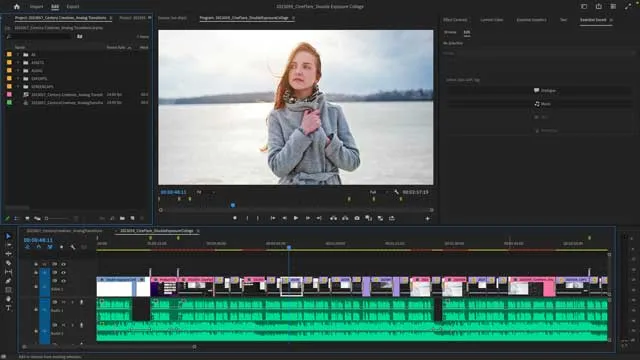
An authentic Premiere timeline from my production workflow.
This page may include affiliate links.
I only recommend software I would seriously evaluate for real creator or production workflows.
⭐⭐⭐⭐⭐
I pay for Adobe Creative Cloud and have used it every day in my 20-year career as a video editor, producer, and colorist.
Use the Adobe link below to check the current Creative Cloud offer. It can support this site and helps me keep these guides updated. Check current Adobe Creative Cloud offer.
Get Adobe Creative Cloud Now!If Premiere fits the job, check the current Premiere offer. The disclosure in the card above applies to this tracked link.
2. Final Cut Pro: best Mac-only alternative
Final Cut Pro is the clearest alternative when you want to stay entirely on the Mac. Its Magnetic Timeline takes a little adjustment if you learned on a track-based editor, but it becomes fast once you stop trying to force it to behave like Premiere.
Apple's current release is Final Cut Pro 12.3. The Mac app is $299.99 as a one-time purchase. It is also part of Apple Creator Studio, which costs $12.99 per month or $129 per year after a one-month trial. Apple says existing one-time-purchase owners will continue to receive updates, though some premium content belongs to the subscription.
Why I recommend it
- The one-time license is straightforward for a dedicated Mac editor.
- The Magnetic Timeline is quick for rearranging stories without knocking sync apart.
- Apple's media, proxy, and background-processing tools suit a Mac-centered workflow.
- You can import an iMovie project when a simple edit needs more control.
The drawback
Final Cut Pro is Mac-only. It is a weaker fit when collaborators expect a Premiere project or the job moves between Windows and macOS. Some current features, including several intelligent search and caption tools, also require Apple silicon.
Final Cut Pro currently requires macOS 15.6 or later, 8GB of memory, and 7.2GB of available storage. Apple recommends 16GB of memory. For a deeper comparison, read my Final Cut Pro vs Premiere Pro guide.
Final Cut Pro app icon.
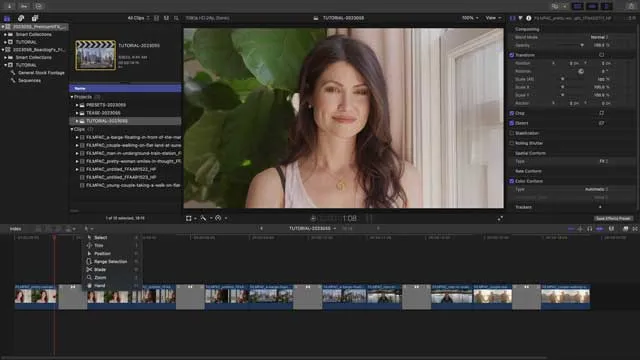
An authentic Final Cut Pro workspace.
3. DaVinci Resolve: best free professional editor
DaVinci Resolve is the first free editor I would test for serious work. The free version combines editing, color, visual effects, motion graphics, and Fairlight audio in one application. It is not a cut-down toy.
Blackmagic's current release is DaVinci Resolve 21. The free version handles virtually all 8-bit formats at up to 60 frames per second and Ultra HD 3840-by-2160. Resolve Studio costs $295 and adds the Neural Engine, more effects, noise reduction, text-based editing, Magic Mask, higher frame rates, and resolutions beyond 4K.
Why I recommend it
- The free version can carry a real project from edit through color and audio.
- Its color tools provide room to grow without moving the project elsewhere.
- Studio is a one-time purchase rather than another required subscription.
- The same application runs on Mac, Windows, and Linux.
The drawback
Resolve asks more of both the editor and the computer. The separate Cut, Edit, Fusion, Color, Fairlight, and Deliver pages make sense over time, but they can be a lot on day one. Check current Blackmagic requirements and test your heaviest footage before choosing hardware.
If you are comparing it with the easiest paid option, my Filmora vs DaVinci Resolve guide explains the tradeoff.
DaVinci Resolve editing and AI tools.
4. iMovie: easiest free editor for a first project
iMovie is the simplest starting point here. It is free from the Mac App Store and gives you a clean timeline, titles, transitions, basic color and audio controls, stabilization, green screen, picture-in-picture, and 4K export on compatible Macs.
Apple's current Mac version is iMovie 10.4.4. It requires macOS 15.6 or later, 4GB of memory, and 3.5GB of available storage. The Mac app can import Magic Movie and Storyboard projects created on an iPhone or iPad. It does not create those mobile project types itself.
Why I recommend it
- A new editor can finish a useful video without fighting the interface.
- It handles phone and camera footage, plus titles, voiceover, and music.
- A project can move into Final Cut Pro when it needs more control.
The drawback
You will hit the ceiling sooner. iMovie is not built for complex track layouts, detailed finishing, large collaborative jobs, or a deep plug-in workflow. That limitation is also what keeps it approachable.
My iMovie vs Final Cut Pro guide can help when you are ready to move up.
Apple iMovie app icon.
5. Filmora 15: best for quick, template-heavy edits
Filmora sits between iMovie's simplicity and the larger professional apps. It is easy to get around, but it also includes multicam editing, planar tracking, keyframes, screen recording, captions, templates, and a long list of AI-assisted tools.
The current major release is Filmora 15. Wondershare offers a free trial, annual plans, and a perpetual plan. The perpetual license covers Filmora 15 updates, not every future major upgrade. AI credits, cloud storage, creative assets, and renewal terms differ by plan, so compare the live checkout rather than relying on an old price table.
Why I recommend it
- Templates and guided tools can shorten a social or tutorial edit.
- The interface is less intimidating than Resolve for a new editor.
- A version-limited one-time license is available alongside subscriptions.
The drawback
The plan comparison needs careful reading. Some AI tools consume credits, and creative-asset trials can renew separately from the editor. Confirm the software license, asset plan, credit allowance, renewal, and refund terms before buying.
Wondershare currently supports macOS 10.15 through macOS 26. It lists 8GB of memory as the minimum, 16GB for HD and 4K work, and 10GB of free disk space. Wondershare recommends an SSD for editing HD and 4K video. My Filmora pricing guide has more detail on the plan differences.
Wondershare Filmora app logo.
How to Buy Filmora Video Editor
If Filmora fits your workflow, using my Filmora affiliate link helps support the site at no extra cost to you.
Before buying, check the current plan terms, renewal details, AI-credit limits, and refund policy so you know exactly what is included.
Which one should you choose?
- Choose Premiere when paid work, Adobe integration, or cross-platform handoff matters most.
- Choose Final Cut Pro when you want a focused Mac workflow and a one-time purchase.
- Choose DaVinci Resolve when you want the most capable free editor and are willing to learn it.
- Choose iMovie when the goal is to finish a first video without buying software.
- Choose Filmora when speed, templates, and guided tools matter more than a traditional pro workflow.
Download the trial or free version and finish one representative project. Use your own camera files, titles, music, effects, and delivery settings. A ten-minute test clip tells you very little about a three-hour interview, a multicam show, or a graphics-heavy client job.
Mac hardware advice before you buy software
The editor is only part of the system. Codec, frame size, effects, storage, memory, and plug-ins can matter more than the application logo. I would not replace a Mac until I tested the same difficult section with proxies and confirmed that storage is not the bottleneck.
- Memory: 16GB is a practical starting point; 32GB or more gives complex work room to breathe.
- Storage: keep active media and cache on a fast drive with plenty of free space.
- Codec: long-GOP camera files may benefit from proxies even on a recent Mac.
- Cooling: sustained exports and effects work are different from short playback tests.
- Compatibility: check the exact macOS and chip requirements before updating either the app or the operating system.
My best Mac for video editing guide goes deeper on memory, storage, codecs, and when a hardware upgrade is worth it.
My bottom line
Premiere remains my working choice because it fits the rest of my production setup. Final Cut Pro is the strongest Mac-only alternative, Resolve is the best free professional starting point, iMovie is the easiest first editor, and Filmora is useful when quick templates matter more than a traditional post workflow.
Do not choose from a feature grid alone. Finish one real project, watch the export away from the editing app, and make sure the price and handoff still make sense after the novelty wears off.
Frequently asked questions
What is the best video editor for Mac overall?
Premiere is my pick for paid client work because it fits my Adobe and After Effects workflow. If you want a Mac-only editor without a required subscription, Final Cut Pro is the better place to start.
What is the best free video editor for Mac?
DaVinci Resolve has the strongest free professional toolset here. iMovie is easier for a first project, but Resolve gives you much more room to grow.
Is Final Cut Pro better than Premiere on a Mac?
It depends on the workflow. Final Cut Pro is Mac-only, fast to navigate, and available as a one-time purchase. Premiere is cross-platform and fits better when projects move through After Effects, Audition, or Adobe teams.
Can iMovie edit 4K video on a Mac?
Yes. Apple's current Mac App Store listing supports editing and exporting up to 4K on compatible Macs. It is still a simpler editor than the other four choices in this guide.
Which Mac video editors can I buy once?
Final Cut Pro and DaVinci Resolve Studio have current one-time purchase options. Filmora also lists a perpetual plan, but that license is tied to Filmora 15 updates rather than every future major version.
How much memory should a Mac have for video editing?
I treat 16GB as a practical floor for regular HD and light 4K work. I prefer 32GB or more for multicam, effects, large formats, or several creative apps open together. Those are workflow recommendations, not universal minimums.
Can a MacBook Air handle video editing?
A recent Apple silicon MacBook Air can handle many short HD and 4K projects, especially with proxies. Long exports, multicam, noise reduction, and heavy effects are better reasons to consider more memory and a Mac with active cooling.
Official sources checked
I checked these product, release, pricing, and compatibility pages on August 3, 2026:
- Adobe Premiere plans
- Adobe Premiere release notes
- Adobe Premiere system requirements
- Apple Final Cut Pro features, pricing, and requirements
- Apple Final Cut Pro release notes
- Apple iMovie Mac App Store listing
- Blackmagic Design DaVinci Resolve 21
- Wondershare Filmora for Mac
- Wondershare Filmora for Mac requirements
- Wondershare Filmora 15 release guide
- Wondershare Filmora plan comparison
Final Cut Pro Related Posts
How to Create a Seamless Transition in Final Cut Pro
Mastering the Essentials: A Beginner's Guide to Final Cut Pro Keyboard Shortcuts
Optimizing Performance in Final Cut Pro
How to Work With iPhone HDR Footage in Final Cut Pro
All About the Final Cut Pro Student Discount
iMovie Related Posts
What is iMovie? The Ultimate Reference Guide
Creating Amazing Home Videos with iMovie
Editing Vlogs with iMovie: Tips and Techniques
Mastering Social Media Videos: iMovie for Instagram and TikTok
Common Issues in iMovie and How to Fix Them
Exploring the Evolution of iMovie in the Apple Ecosystem
Tips for Professional Editing in iMovie: Taking Your Skills to the Next Level
Video Editing Related Posts
Adobe Creative Cloud for Video Editing
Top 10 Video Editing Software for Mac
The Benefits of Dual-Monitor Setups for Video Editing
How to Choose the Right Video Editing Monitor for Your Needs
Best Monitors for Video Editing
(Almost) 50 Mistakes Every New Video Producer Makes
Breakthrough AI Tools: Elevate Your Video Production Game!
Find the Best Export Settings for YouTube Videos Now!
Your Guide on Where To Find Video Editor Remote Jobs
Adobe video workflow guides